No products in the cart.
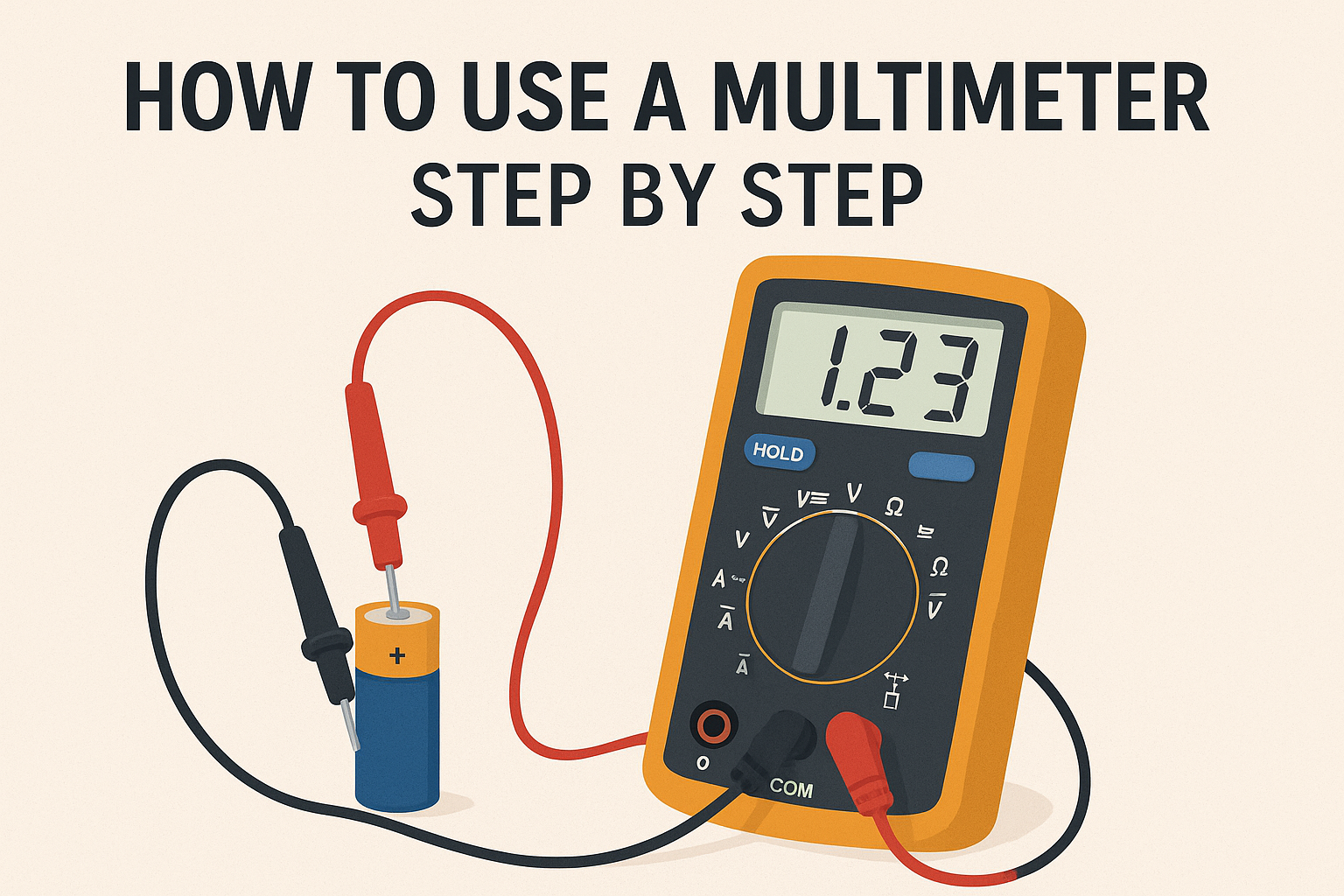
Introduction: Why Every DIYer Needs a Digital Multimeter
Whether you’re a DIY enthusiast, a budding electronics hobbyist, or a homeowner tackling small electrical repairs, a digital multimeter (DMM) is an indispensable tool. It lets you measure voltage, current, and resistance quickly and accurately. For beginners, learning how to use a multimeter may seem intimidating, but this guide will break it down step by step.
Before diving into complex projects, understanding your multimeter and its safety features ensures your DIY experiments are effective and safe.
What Is a Digital Multimeter and How Does It Work?
A digital multimeter is an electronic measuring instrument that combines several measurement functions into one device. It can measure:
-
Voltage (AC/DC) – checks electrical potential differences.
-
Current (AC/DC) – measures the flow of electrons.
-
Resistance (Ohms) – detects circuit continuity and component resistance.
Pen-type multimeters are compact versions designed for quick, on-the-go measurements, ideal for simple troubleshooting tasks.
Benefits of using a digital multimeter:
-
Accurate readings with digital displays.
-
Versatility: measures multiple electrical properties.
-
Safety: overload protection in most models.
Types of Multimeters Available in Kenya
When choosing a multimeter, consider:
-
Standard Digital Multimeters – Ideal for home and hobby use. Can measure voltage, current, and resistance.
-
Pen-Type Multimeters – Portable, lightweight, and perfect for simple AC voltage checks or continuity tests.
-
Advanced Multimeters – Suitable for electronics professionals or high-voltage applications; include features like capacitance and frequency measurements.
Comparison Table: Digital vs. Pen-Type Multimeter
| Feature | Digital Multimeter | Pen-Type Multimeter |
|---|---|---|
| Display | LCD digital display | Single or LED indicator |
| Functionality | Voltage, Current, Resistance, Capacitance, Frequency | Voltage, Resistance, Continuity |
| Portability | Medium | High |
| Best For | DIY projects, electronics, repairs | Quick troubleshooting |
How to Safely Use a Digital Multimeter
Safety is crucial when working with electricity. Follow these steps:
-
Read the Manual – Every multimeter has slightly different features.
-
Inspect Leads – Check for frays or cracks.
-
Start with Low Voltage – Beginners should start with battery or small electronics testing.
-
Select the Correct Mode – Choose AC, DC, or resistance as needed.
-
Use the Right Ports – Plug red and black probes into correct jacks (common is usually black).
Step-by-Step Guide for Common Measurements
Measuring Voltage (DC & AC)
-
Turn the dial to the appropriate voltage range.
-
Insert the black probe into COM, red probe into VΩ.
-
Place probes across the component or circuit.
-
Read the digital display.
Measuring Current
-
Turn dial to current (A) range.
-
Connect probes in series with the circuit.
-
Read the display carefully.
Testing Resistance & Continuity
-
Set dial to Ω (Ohms).
-
Touch probes to either end of the component or wire.
-
A beep or low resistance reading confirms continuity.
Practical DIY Applications in Kenya
A digital multimeter is versatile across many scenarios:
-
Home Electrical Repairs: Identify faulty outlets, switches, or wiring issues.
-
Automotive DIY Projects: Test car batteries and alternators.
-
Electronics Hobbies: Build and troubleshoot circuits safely.
-
Renewable Energy Projects: Test solar panels and batteries.
Suggested Related Tools from Cougar Nets for DIY Enthusiasts:
-
PVC Tarpaulin (650 GSM) – for covering electrical tools and work areas.
-
Braided Rope (10mm) – organize cables safely.
-
Diesel Water Pump – DIY electrical setup testing for pumps.
Tips for Beginners
-
Always disconnect power before testing high-voltage circuits.
-
Start with batteries to understand the basic functions.
-
Keep probes steady to avoid false readings.
-
Regularly calibrate your multimeter if possible.
-
Store in a dry, dust-free environment.
Troubleshooting Common Multimeter Mistakes
-
Reading Fluctuates: Ensure stable contact and correct mode.
-
No Display: Check battery or probe connection.
-
Unexpected Beep: Verify continuity settings aren’t accidentally on.
Choosing the Right Multimeter for Your Needs
Factors to consider when buying:
-
Functionality: Do you need voltage only or more features?
-
Portability: Pen-type for simple tasks; digital multimeter for multiple functions.
-
Accuracy: Check the specified accuracy in the manual.
-
Safety Rating: Look for CAT II/III/IV for home or industrial use.
Recommended Products:
-
Digital Multimeter – general DIY use.
-
Pen-Type Multimeter – portable and simple checks.
Conclusion
A digital multimeter is a must-have tool for any DIYer, electronics hobbyist, or homeowner in Kenya. Learning to use it safely and effectively opens up endless possibilities for home repairs, automotive projects, and electronic experimentation. With practice, measuring voltage, current, and resistance becomes intuitive and safe.
CTA: Get Your Premium Netting Solutions Today!
For the best quality netting solutions for farming, construction, home, or any other project, look no further than Cougar Nets. Our team of experts is ready to help you choose the perfect product for your needs.
NATIONWIDE & EAST AFRICA DELIVERY AVAILABLE
Premium quality nets for all applications
Professional installation & expert advice
Bulk orders & custom solutions available
Serving Kenya (Nairobi, Mombasa, Kisumu), Uganda, Tanzania, Rwanda & beyond.
Contact Us for a Quote:
Cougar Nets
Email: sales@cougarnets.com | info@cougarnets.com
Phone: +254 706 903 465
Visit Us: Darosa Plaza, Karen Rd, Nairobi
Website: https://cougarnets.co.ke/