No products in the cart.
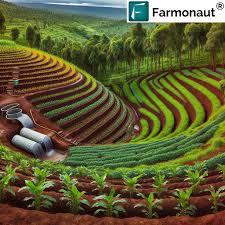
Sustainable farming practices in Kenya enhance crop yields, improve soil health, and reduce environmental impact by optimizing resource use and minimizing chemical inputs. By adopting methods such as conservation agriculture, integrated pest management, and protective netting, farmers can achieve higher productivity while conserving water, soil, and biodiversity. Cougar Nets provides premium nets and accessories that support sustainable farming operations across Kenya and East Africa.
Introduction: The Importance of Sustainable Farming in Kenya
Sustainable farming in Kenya is critical for ensuring food security, maintaining soil fertility, and protecting natural resources. With smallholder farms dominating the agricultural landscape, implementing environmentally friendly practices is essential for long-term productivity. Techniques that conserve water, reduce chemical use, and enhance biodiversity not only improve yields but also mitigate the effects of climate change.
Cougar Nets contributes to sustainable farming by offering shade nets, poultry mesh, anti-bird nets, fish pond covers, and trellis nets, which protect crops, livestock, and aquaculture systems from environmental stressors while reducing resource wastage. All products are supplied with eTIMS-compliant invoices, supporting farm business compliance and investment deductions.
H2: Conservation Agriculture for Soil Health
Conservation agriculture focuses on minimal soil disturbance, permanent soil cover, and crop rotation to enhance soil fertility and reduce erosion.
Key Practices:
-
No-Till or Reduced Tillage: Preserves soil structure and moisture.
-
Cover Crops: Improve organic matter and nutrient cycling.
-
Crop Rotation: Breaks pest and disease cycles.
| Practice | Benefits | Local Application in Kenya |
|---|---|---|
| No-Till | Reduces erosion, retains moisture | Maize and beans in Rift Valley |
| Cover Crops | Enhances nitrogen fixation | Legumes like cowpeas in Kitale |
| Crop Rotation | Reduces pests | Maize → kale → legumes rotations in Nairobi |
Integrating Shade Nets over high-value crops can reduce water evaporation and improve microclimates, complementing soil health practices.
H2: Efficient Water Management
Water conservation is central to sustainable farming.
Techniques:
-
Drip Irrigation: Provides precise water delivery, reducing waste.
-
Rainwater Harvesting: Collects runoff for dry periods.
-
Mulching: Reduces soil evaporation and maintains temperature.
Protective Nets for Water Efficiency:
-
Fish Pond Cover Nets reduce water loss and protect aquaculture from debris (Fish Pond Cover Net).
-
Shade Nets reduce evaporation in greenhouses and crop nurseries.
-
Anti-Bird Nets maintain clean water points by preventing contamination (Anti-Bird Net).
Efficient water management is especially important in semi-arid zones such as Machakos and Makueni, where water scarcity is common.
H2: Integrated Pest and Disease Management (IPM)
Sustainable farms reduce chemical inputs by adopting IPM strategies:
-
Biological Controls: Use natural predators to reduce pests.
-
Cultural Practices: Crop rotation, intercropping, and sanitation.
-
Mechanical Controls: Traps, handpicking pests, and netting.
Netting Solutions:
-
Insect Nets protect crops from pests while reducing pesticide use (Insect Nets).
-
Trellis Nets improve airflow around crops, reducing fungal infections (Trellis Net).
IPM improves yield quality while safeguarding human health and the environment.
H2: Organic Fertilization and Soil Enhancement
-
Compost: Returns nutrients to the soil and reduces chemical dependence.
-
Animal Manure: Provides nitrogen, phosphorus, and potassium.
-
Green Manure: Planting legumes and cover crops adds organic matter.
| Fertilizer Type | Benefits | Kenyan Application |
|---|---|---|
| Compost | Improves soil structure | Vegetable farms in Kisumu |
| Animal Manure | Nutrient-rich, low cost | Dairy farms in Eldoret |
| Green Manure | Nitrogen fixation | Legume cover crops in Kitale |
Using protective nets over composting areas can prevent contamination and maintain proper moisture.
H2: Climate-Smart Practices
Sustainable farming must adapt to climate change:
-
Agroforestry: Integrating trees reduces wind erosion and provides shade.
-
Drought-Resistant Varieties: Maize, beans, and millet adapted to arid areas.
-
Seasonal Planting Schedules: Align planting with rainfall forecasts.
Cougar Nets products like shade nets help maintain suitable microclimates, reducing heat stress on crops and livestock.
H2: Benefits of Protective Netting in Sustainable Farming
Protective nets are a practical component of sustainable agriculture:
-
Shade Nets: Reduce water consumption and protect crops from sunburn.
-
Poultry Mesh: Secures birds, reduces disease exposure, and allows free-range farming.
-
Anti-Bird Nets: Prevent crop losses without chemical deterrents.
-
Fish Pond Cover Nets: Protect aquaculture from predators and reduce water contamination.
All netting solutions are eTIMS-compliant, ensuring proper documentation for farm tax deductions.
H2: Monitoring, Record-Keeping, and Compliance
-
Track crop yields, water usage, and fertilizer application.
-
Maintain records for eTIMS compliance to qualify for tax incentives.
-
Integrate netting solutions in record-keeping to monitor durability, replacement needs, and performance.
H2: Economic and Environmental Benefits
-
Increased Yields: Improved soil fertility and pest control.
-
Resource Efficiency: Reduced water and chemical use.
-
Environmental Protection: Lower pollution and enhanced biodiversity.
-
Long-Term Sustainability: Preserves farmland for future generations.
| Metric | Conventional Farming | Sustainable Farming with Nets |
|---|---|---|
| Yield (Maize/Ha) | 2.5–3 tons | 4–5 tons |
| Water Use Efficiency | 60–70% | 85–90% |
| Pesticide Use | High | Reduced by 50–70% |
| Soil Health | Declining | Improving |
Conclusion
Adopting sustainable farming practices in Kenya ensures higher yields, efficient resource use, and environmental protection. Integrating protective nets such as shade nets, poultry mesh, trellis nets, fish pond covers, and anti-bird nets enhances resilience, reduces losses, and supports climate-smart agriculture. Cougar Nets provides premium products, expert guidance, and eTIMS-compliant documentation, helping farmers implement sustainable practices while maximizing productivity.
CTA: Get Your Sustainable Farming Solutions Today!
Ensure your farm is productive, eco-friendly, and resilient with Cougar Nets. We provide premium nets and accessories, expert installation advice, and support for climate-smart farming.
Nationwide & East Africa Delivery Available
Premium quality nets for all applications
Professional installation and expert advice
Bulk orders and custom solutions available
Serving Kenya (Nairobi, Eldoret, Kisumu), Uganda, Tanzania, Rwanda, South Sudan, Ethiopia, and beyond
Contact Us for a Quote:
Email: sales@cougarnets.com | info@cougarnets.com
Phone: +254 706 903 465
Visit Us: Darosa Plaza, Karen Rd, Nairobi