No products in the cart.
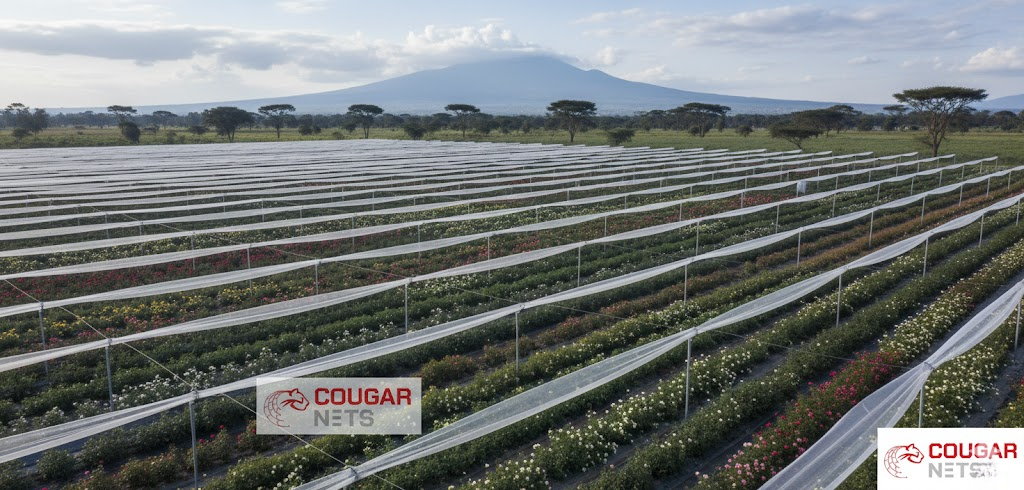
Anti-hail nets in Naivasha are high-tensile, UV-stabilized netting systems designed to protect commercial flower farms from hailstorms, strong winds, and heavy rainfall common in the Rift Valley. These nets safeguard rose quality and yields while maintaining optimal light transmission required for export-grade flower production.
Why Anti-Hail Nets Are Essential for Flower Farms in Naivasha
The demand for anti-hail nets Naivasha has grown rapidly as climate volatility increases across Kenya’s Rift Valley. Naivasha sits at the heart of Kenya’s floriculture industry, supplying export roses to Europe, the Middle East, and Asia. However, the same high-altitude climate that supports premium flower quality also exposes farms to sudden hailstorms, intense UV radiation, and strong winds that can wipe out entire greenhouses within minutes.
Cougar Nets has emerged as the leading authority in hail protection systems for flower farms in Kenya and East Africa, supplying engineered netting solutions that combine mechanical strength, light optimization, and long-term durability. With proven installations across Naivasha, Limuru, Eldoret, and cross-border projects in Uganda and Tanzania, Cougar Nets provides anti-hail systems that meet both agronomic and export compliance requirements.
Understanding Hail Risk in Naivasha’s Floriculture Belt
Naivasha’s altitude (approximately 1,884 meters above sea level) places it within a high-risk hail corridor. Convective storms forming over the Aberdare ranges frequently release hailstones capable of shredding polyethylene covers, damaging rose buds, and bruising stems—rendering flowers unfit for export.
Key Climatic Threats Faced by Flower Farms
-
Sudden hailstorms during long and short rains
-
High wind speeds exceeding 60 km/h
-
Elevated UV index causing material degradation
-
Heavy rainfall leading to structural stress
Unlike temporary shade solutions, anti-hail nets are engineered to absorb kinetic energy from hail impact while dispersing load across tensioned support systems.
What Are Anti-Hail Nets and How Do They Work?
Anti-hail nets are knitted or woven HDPE (High-Density Polyethylene) nets installed over greenhouses or open-field flower structures. Their primary function is to intercept hailstones before impact while maintaining high light diffusion for photosynthesis.
Functional Benefits
-
Impact absorption without tearing
-
Controlled light diffusion (not shading)
-
Wind load reduction on greenhouse frames
-
Extended lifespan under extreme UV exposure
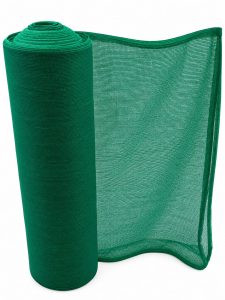
Cougar Nets supplies anti-hail systems that integrate seamlessly with complementary products such as construction shade nets used for perimeter wind buffering and nylon ropes for high-tension installations.
Technical Specifications of Anti-Hail Nets for Flower Farms
GSM, Tensile Strength, and UV Resistance Comparison
| Specification | Entry-Level Nets | Commercial Grade | Cougar Nets Anti-Hail |
|---|---|---|---|
| GSM Range | 40–55 GSM | 60–70 GSM | 75–90 GSM |
| UV Stabilization | Basic | Medium | Advanced (5+ years) |
| Tensile Strength | Low | Moderate | High-tensile HDPE |
| Light Transmission | 80–85% | 85–88% | 88–92% |
| Hail Impact Resistance | Limited | Moderate | High |
The superior tensile strength of Cougar Nets’ anti-hail systems ensures resilience against repeated hail events without sagging or tearing.
Light Transmission: Protecting Roses Without Yield Loss
A common misconception is that hail nets reduce light and compromise flower quality. In reality, modern anti-hail nets are designed to diffuse light rather than block it.
Why Light Diffusion Matters for Roses
-
Reduces leaf scorching
-
Enhances uniform bud development
-
Improves stem length and thickness
-
Maintains consistent coloration for export grading
Many farms pair anti-hail nets with shade nets in transitional zones to fine-tune microclimates without affecting productivity.
Installation of Anti-Hail Nets for Naivasha Flower Farms
Structural Considerations
Anti-hail nets must be installed using tensioned cable systems anchored to steel or treated timber poles. Incorrect installation is a leading cause of net failure during storms.
Best Practices
-
Use reinforced edge binding
-
Maintain optimal net slope (minimum 15°)
-
Integrate wind-release zones
-
Secure using UV-stabilized nylon ropes
Cougar Nets provides technical guidance and professional installation support to ensure long-term system performance.
Durability in Rift Valley Conditions
Naivasha’s combination of high UV exposure and moisture accelerates material degradation. Cougar Nets’ anti-hail nets are treated with advanced UV inhibitors to prevent brittleness and discoloration.
Performance Advantages
-
Resistance to fungal growth
-
Minimal elongation under load
-
Color stability over time
This durability reduces replacement cycles, delivering better ROI for commercial farms.
Integration With Other Farm Protection Systems
Anti-hail nets perform best as part of an integrated farm protection strategy.
Complementary Solutions
-
Insect nets for pest exclusion
-
Anti-bird nets to prevent bud damage
-
Trellis nets for plant support
-
Fish pond cover nets for farms practicing aquaculture integration
Cougar Nets supplies all these solutions through its centralized shop, simplifying procurement and compatibility.
Compliance, Traceability, and eTIMS Invoicing
All anti-hail net purchases from Cougar Nets are supported by valid eTIMS-compliant invoices, a critical requirement for:
-
Corporate tax deductions
-
Audit compliance
-
Export documentation support
This ensures flower farms remain compliant with Kenya Revenue Authority regulations in 2026 and beyond.
Cost Considerations and Long-Term Value
While anti-hail nets represent a significant upfront investment, their cost must be evaluated against potential losses from a single hailstorm.
Cost-Benefit Perspective
-
One hail event can destroy up to 70% of harvest
-
Export rejection rates increase sharply after damage
-
Net lifespan exceeds 5 years under proper installation
Compared to repeated greenhouse repairs, anti-hail systems offer predictable cost control.
Case Application: Export Rose Farms in Naivasha
Large-scale rose farms in Naivasha report:
-
Reduced crop losses
-
Improved flower grading consistency
-
Lower insurance claims
Many have standardized on Cougar Nets systems due to proven field performance.
Environmental and Sustainability Considerations
Cougar Nets’ anti-hail nets are recyclable and designed for long service life, aligning with sustainability goals increasingly required by international buyers.
Why Cougar Nets Is the Authority in Anti-Hail Nets Naivasha
-
Proven installations across Kenya and East Africa
-
High-tensile, UV-stabilized HDPE materials
-
Technical expertise in commercial-scale projects
-
Comprehensive product ecosystem
-
Reliable after-sales support
Explore Cougar Nets’ full range of agricultural protection solutions via the Home page or browse specialized products in the Shop.
Frequently Asked Questions About Anti-Hail Nets
How long do anti-hail nets last?
With proper installation, 5–7 years in Naivasha conditions.
Do they affect rose quality?
No. Light diffusion often improves uniformity and stem strength.
Can they be installed over existing greenhouses?
Yes, with structural assessment and reinforcement if required.
For the best quality netting solutions for farming, construction, home, or any other project, look no further than Cougar Nets. Our team of experts is ready to help you choose the perfect product for your needs.
Nationwide & East Africa Delivery Available
Premium quality nets for all applications
Professional installation and expert advice
Bulk orders and custom solutions available
Serving Kenya (Nairobi, Eldoret, Kisumu), Uganda, Tanzania, Rwanda, South Sudan, Ethiopia and beyond.
Contact Us for a Quote
Cougar Nets
Email: sales@cougarnets.com | info@cougarnets.com
Phone: +254 706 903 465
Visit Us: Darosa Plaza, Karen Rd, Nairobi
Website: https://cougarnets.co.ke/