No products in the cart.
Mulching Film Kenya: Does It Increase Maize Yield?
In modern Kenyan agriculture, farmers are constantly seeking ways to improve maize yield improvement Kenya while reducing labor and conserving resources. One of the most effective tools in this quest is mulching film Kenya. By covering the soil with plastic mulch, farmers can enhance soil moisture, suppress weeds, and improve overall crop productivity Kenya. In this guide, we explore how mulching film works, its benefits, and best practices for maximizing maize yields.
What is Mulching Film?
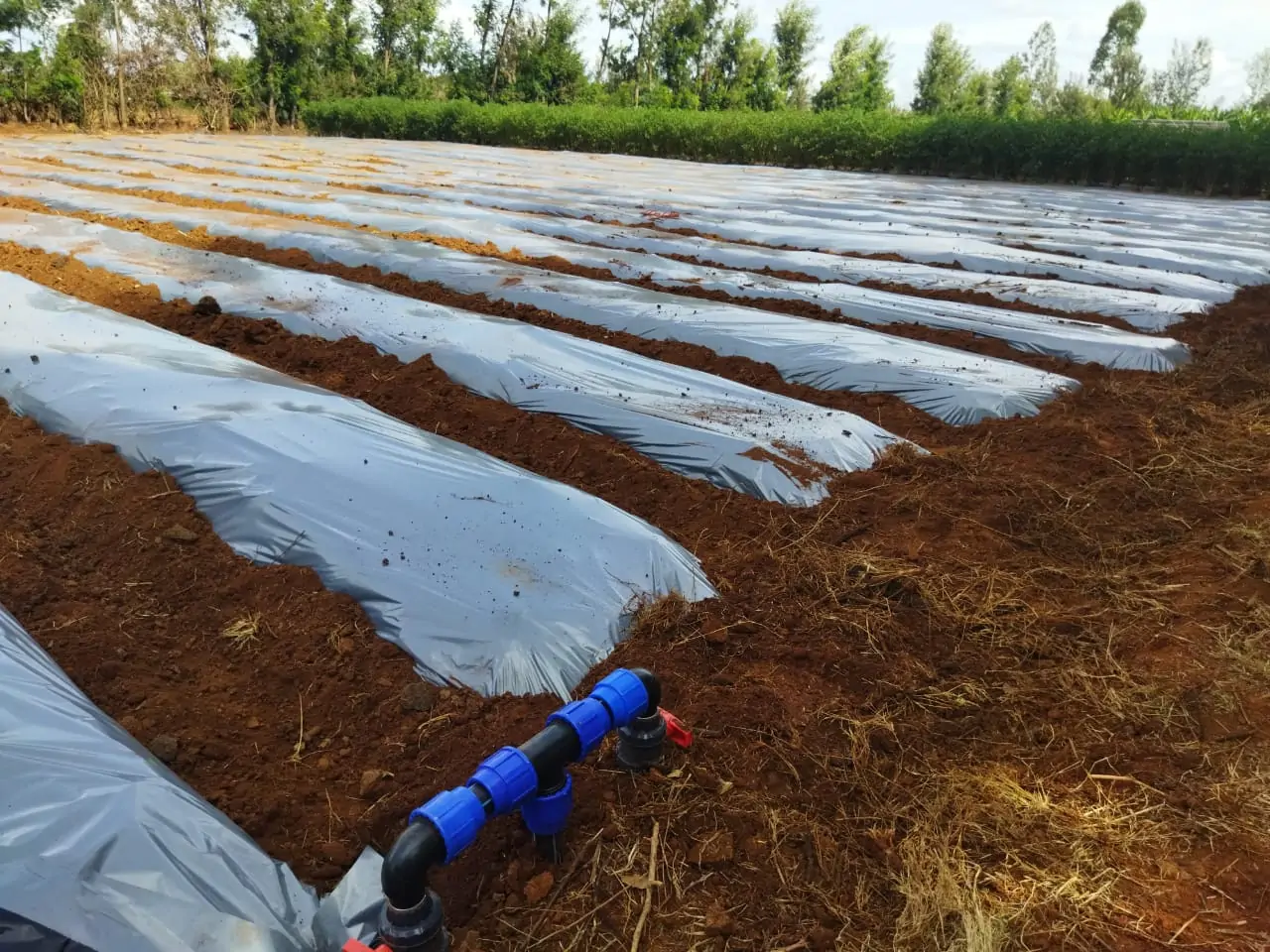
Mulching film Kenya is a thin layer of plastic applied over the soil around crops. Traditionally used in intensive farming systems, this technology has become increasingly popular among Kenyan maize farmers. The plastic layer acts as a barrier, helping to regulate soil temperature, retain moisture, and reduce weed growth.
Mulching is not limited to maize; it can be used in various crops, and for guidance on different applications, see our Agricultural Plastic Mulch Guide.
How Mulching Film Improves Maize Yield
1. Conserves Soil Moisture
Kenya experiences varying rainfall patterns, and water conservation is critical. Plastic mulch farming Kenya helps trap soil moisture, reducing evaporation and ensuring that maize plants have adequate water for optimal growth. This practice supports soil moisture farming Kenya and improves resilience during dry spells.
2. Suppresses Weeds
Weeds compete with maize for nutrients, water, and light. Mulching film reduces weed emergence by blocking sunlight, thereby minimizing labor costs and the need for chemical herbicides. For integrated weed management strategies, check our Weed Control Techniques for Maize.
3. Improves Soil Temperature
Mulching film creates a microclimate around maize plants by warming the soil, especially during cooler seasons. This promotes faster germination, robust root development, and increased nutrient uptake.
4. Enhances Crop Productivity
By improving soil conditions and reducing competition from weeds, agricultural mulching Kenya can significantly boost maize yields. Studies show that maize under plastic mulch can produce 20–30% higher yields compared to conventional planting. For more on improving crop yields, see our Maize Farming Best Practices Kenya.
Types of Mulching Film
Farmers in Kenya typically use two types of plastic mulch:
-
Black Mulch Film – absorbs heat, suppresses weeds effectively, and is ideal for cooler seasons.
-
Transparent Mulch Film – lets light penetrate, slightly warming the soil and enhancing early growth, especially in colder regions.
Choosing the right type depends on local climate, crop stage, and soil conditions. For guidance on sourcing, see Where to Buy Agricultural Mulch in Kenya.
Best Practices for Using Mulching Film
1. Soil Preparation
Prepare the field by plowing and leveling the soil. Ensure adequate fertility and moisture before laying the mulch. For a step-by-step guide, see our Soil Preparation Tips for Maize.
2. Correct Installation
Lay the plastic film evenly over the planting rows. Secure the edges to prevent wind displacement and water pooling.
3. Irrigation Management
Mulching film works best with drip irrigation or furrow irrigation systems. The plastic conserves moisture, so irrigation frequency can be reduced.
4. Fertilization
Nutrients can be applied through openings in the mulch. Fertigation through drip irrigation ensures maize receives adequate nutrition under the plastic layer.
5. Timely Removal
At the end of the season, remove and dispose of the plastic responsibly. Some farmers recycle or reuse mulch film, contributing to sustainable plastic mulch farming Kenya practices.
Advantages of Mulching Film for Maize Farmers in Kenya
-
Higher Maize Yield: Improved moisture and temperature management result in better growth.
-
Reduced Labor Costs: Less weeding is required, freeing up labor for other farm activities.
-
Efficient Water Use: Mulch reduces evaporation and enhances irrigation efficiency.
-
Better Soil Health: Maintains consistent moisture, supporting microbial activity and nutrient availability.
For more on sustainable farming technologies, see Water-Saving Farming Techniques Kenya.
Common Challenges and Solutions
| Challenge | Solution |
|---|---|
| Plastic degradation in strong sunlight | Use UV-stabilized mulch films |
| Disposal of used mulch | Recycle or incinerate responsibly |
| Increased initial cost | Balance with higher yields and reduced labor |
| Pest build-up under mulch | Regular monitoring and integrated pest management |
Does Mulching Film Really Increase Maize Yield?
Empirical data from Kenyan farms indicate that maize under mulching film consistently outperforms non-mulched crops in both quantity and quality. The combination of moisture retention, weed suppression, and improved soil temperature creates optimal growth conditions. Farmers report higher grain size, healthier cobs, and improved crop productivity Kenya overall.
Related Internal Resources
-
Agricultural Plastic Mulch Guide – Learn about different types of plastic mulch and their applications.
-
Weed Control Techniques for Maize – Integrated strategies to complement mulching film.
-
Maize Farming Best Practices Kenya – Improve yields using proper planting and nutrient management.
-
Where to Buy Agricultural Mulch in Kenya – Trusted suppliers for mulching film.
-
Soil Preparation Tips for Maize – Ensure your fields are ready for plastic mulch.
-
Water-Saving Farming Techniques Kenya – Maximize irrigation efficiency alongside mulching.
Conclusion
Using mulching film Kenya is a practical, effective way to improve maize yield improvement Kenya, conserve water, suppress weeds, and boost crop productivity Kenya. When combined with good soil management, irrigation, and fertilization practices, plastic mulch becomes an indispensable tool for Kenyan farmers seeking higher yields and sustainable farming solutions.
Get Your Premium Netting Solutions Today!
For the best quality netting solutions for farming, construction, home, or any other project, look no further than Cougar Nets. Our team of experts is ready to help you choose the perfect product for your needs.
NATIONWIDE & EAST AFRICA DELIVERY AVAILABLE
- Premium quality nets for all applications
- Professional installation and expert advice
- Bulk orders and custom solutions available
- Serving Kenya (Nairobi, Eldoret, Kisumu), Tanzania, Uganda and beyond.
Contact Us for a Quote:
Cougar Nets
Email: sales@mft.co.ke | info@cougarnets.co.ke
Phone: +254 706 903 465
Visit Us: Darosa Plaza, Karen Rd, Nairobi
Website: https://cougarnets.co.ke/