No products in the cart.
Understanding Dam Liner Size Calculation for Kenyan Water Projects
Dam liner size calculation is the first step when planning a reliable lined water reservoir, fish pond, or agricultural dam in Kenya. A correctly sized liner protects against water loss, improves storage efficiency, and ensures long-term performance in demanding environments such as Nairobi’s high UV conditions, Mombasa’s coastal climate, and farming regions across the Rift Valley.
Many farmers, construction companies, and aquaculture operators invest in pond liners without first calculating the required dimensions. This often leads to expensive mistakes, including buying a liner that is too small, creating weak joins, or leaving insufficient material for anchoring.
Cougar Nets provides professional netting and agricultural solutions for different industries, including farming, aquaculture, and water management projects across Kenya and East Africa. Customers can explore a wide range of solutions through the Cougar Nets shop or get expert assistance through the Cougar Nets contact page.
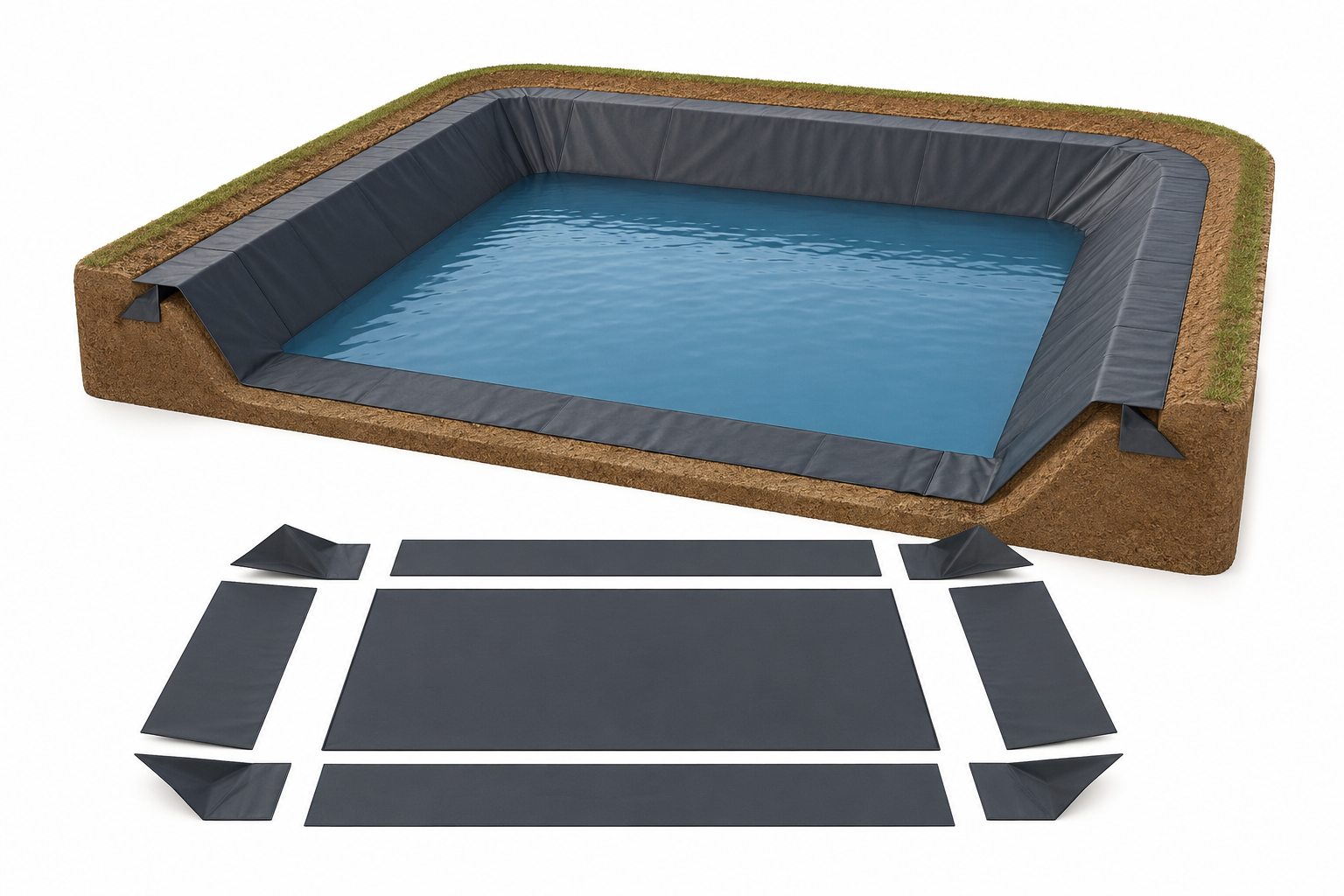
A dam liner is not simply measured by the surface area of the pond. The liner must extend down the side walls, cover the base, and provide additional material around the edges for proper fixing. This is why accurate dam liner size calculation is essential before ordering HDPE, PVC, or other waterproof lining materials.
Why Accurate Dam Liner Size Calculation Matters
A properly calculated liner size determines whether your water storage project succeeds or fails. The correct dimensions help avoid material wastage while ensuring complete coverage of the excavation area.
For agricultural dams in Kenya, liner sizing affects:
- Water retention efficiency
- Installation quality
- Long-term durability
- Maintenance requirements
- Overall project cost
A liner that is too small may expose soil sections, causing seepage and reducing the useful lifespan of the dam. On the other hand, ordering excessive material increases costs unnecessarily.
Professional installers normally consider:
- Pond length
- Pond width
- Maximum depth
- Side slope design
- Anchor trench allowance
- Joining requirements
- Ground movement conditions
For projects involving livestock, irrigation, or aquaculture, proper planning is especially important because water reliability directly affects productivity.
Dam Liner Size Calculation Formula Explained
The basic dam liner size calculation formula is:
Liner Length = Pond Length + (2 × Maximum Depth) + Extra Allowance
Liner Width = Pond Width + (2 × Maximum Depth) + Extra Allowance
The extra allowance covers:
- Anchor trenches
- Edge fixing
- Installation adjustments
- Ground movement protection
For a simple rectangular pond with vertical sides, the calculation begins by adding twice the depth to both measurements.
Example:
Pond dimensions:
- Length: 30 metres
- Width: 20 metres
- Depth: 3 metres
Length calculation:
30m + (2 × 3m) = 36m
Width calculation:
20m + (2 × 3m) = 26m
Before adding anchoring allowance, the minimum liner requirement would be:
36m × 26m
However, professional installations normally add extra material around the perimeter to allow secure fixing.
Dam Liner Size Calculation for a 20m x 30m x 3m Pond
For a 20m x 30m x 3m farm dam, the final liner size depends on the pond design.
Basic Calculation
| Pond Measurement | Size |
|---|---|
| Pond length | 30m |
| Pond width | 20m |
| Pond depth | 3m |
| Length allowance | 6m |
| Width allowance | 6m |
| Minimum liner size | 36m x 26m |
This calculation assumes straight pond walls. Many agricultural dams in Kenya use sloped banks because they improve stability and reduce pressure on the liner.
With sloped sides, additional liner material is required because the distance from the top edge to the pond floor becomes longer.
Factors That Change dam liner size calculation Requirements
While the formula provides a starting point, several site conditions affect the final liner specification.
1. Pond Shape
A rectangular pond is easier to calculate than irregular reservoirs.
Common designs include:
- Rectangular irrigation ponds
- Circular aquaculture ponds
- Farm dams with sloped embankments
- Commercial water storage reservoirs
For complex shapes, accurate measurements should be taken after excavation.
2. Side Slopes
Sloped banks improve dam stability but increase liner requirements.
A pond with a gradual slope may require several additional metres compared with vertical walls.
3. Anchor Trench Size
An anchor trench prevents the liner from moving after installation.
Typical considerations include:
- Soil type
- Wind exposure
- Water pressure
- Rain runoff
The extra material should extend beyond the pond edge to allow secure burial.
4. Liner Material Type
Different liner materials have different installation requirements.
Common options include:
| Material | Common Use | Key Advantage |
|---|---|---|
| HDPE liner | Large dams and reservoirs | High durability |
| PVC liner | Small ponds | Flexible installation |
| Reinforced liners | Commercial applications | Added strength |
Cougar Nets supports various agricultural and utility applications through solutions available in categories such as agricultural and poultry farming supplies and home and garden products.