No products in the cart.
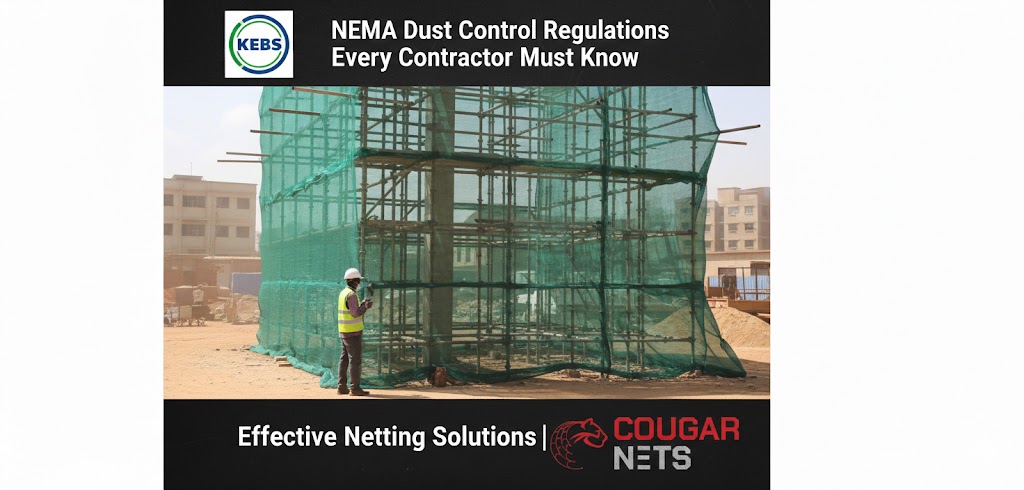
Complying with NEMA dust control regulations in Kenya ensures construction sites remain safe, environmentally responsible, and free from fines or closure orders. Using proper scaffolding debris netting reduces airborne dust, protects workers, and maintains urban air quality.
Construction in Kenya is booming, especially in urban hubs like Nairobi, Mombasa, and Kisumu. However, this growth comes with strict environmental responsibilities. The National Environment Management Authority (NEMA) enforces regulations to control dust and debris, protecting communities and ecosystems. Contractors who ignore these rules risk penalties, project delays, and reputational damage. This guide explains NEMA dust control regulations and how effective netting solutions from Cougar Nets help you stay compliant.
Understanding NEMA Dust Control Regulations
NEMA’s mandate under the Environmental Management and Coordination Act (EMCA), 1999 is to ensure construction projects minimize environmental impacts. Dust is one of the major concerns in urban construction due to its health hazards, regulatory scrutiny, and community complaints.
Key objectives of NEMA dust control regulations include:
-
Protecting workers and nearby residents from inhaling dust particles.
-
Preventing dust from contaminating water bodies and vegetation.
-
Ensuring construction sites comply with urban environmental standards.
-
Mandating the use of control measures such as scaffolding debris netting, water suppression systems, and covered material storage.
Failure to comply with these regulations can result in fines, stop-work orders, or closure of construction sites.
Why Dust Control Matters for Construction Projects in Kenya
-
Health & Safety Compliance: Dust can lead to respiratory diseases for workers and residents near construction sites.
-
Regulatory Compliance: NEMA inspects sites regularly; non-compliance can trigger legal penalties.
-
Project Efficiency: Dust can interfere with machinery and delay finishing work.
-
Community Relations: Minimizing dust ensures good public relations, especially in densely populated areas.
-
Environmental Protection: Dust and debris can contaminate stormwater drainage and urban greenery.
Effective Netting Solutions for NEMA Compliance
Using proper scaffolding debris netting is a critical strategy for complying with NEMA dust control regulations. These nets are designed to:
-
Capture airborne dust and debris.
-
Prevent materials from falling onto pedestrians or neighboring properties.
-
Resist tearing in strong winds and harsh UV conditions.
Types of Netting for Dust Control:
| Net Type | GSM (Grams per Square Meter) | UV Rating | Recommended Use |
|---|---|---|---|
| Construction Shade Net | 320 GSM | 8–12 years | High-rise scaffolding, urban projects |
| Debris Control Net | 150–250 GSM | 5–8 years | Site perimeter dust suppression |
| Insect/Dust Net | 100–150 GSM | 3–5 years | Temporary construction covers, lightweight applications |
At Cougar Nets, all construction nets are UV-stabilized, durable, and compliant with NEMA dust control standards.
7 Key NEMA Dust Control Regulations for Contractors
1. Site Perimeter Dust Barriers
NEMA requires that construction sites in urban areas maintain dust barriers along the perimeter. High-quality scaffolding debris nets effectively contain dust within the site, reducing environmental exposure.
-
Recommended Product: Construction Shade Net
-
Benefit: Reduces airborne dust by 80%–90% around active sites.
2. Covered Material Storage
All dusty materials such as sand, cement, and aggregates must be covered when stored on-site. Netting or tarpaulin coverings prevent dust escape.
| Material | Recommended Cover | Compliance Tip |
|---|---|---|
| Sand | Lightweight debris net | Ensure tight fit and secure edges |
| Cement | Waterproof tarpaulin | Store off-ground on pallets |
| Aggregate | Construction shade net | Rotate stock to prevent wind exposure |
3. Water Spraying & Dust Suppression
NEMA encourages water spraying on exposed surfaces during demolition or material handling. While netting contains dust, water suppression reduces airborne particles further.
-
Tip: Combine Cougar Nets debris netting with water sprays for optimal control.
4. Controlled Demolition & Material Handling
Dust should be minimized during demolition. Nets act as containment screens to catch falling debris.
-
Recommended: Use scaffolding debris nets to cover demolition zones completely.
-
Benefit: Protects nearby roads, pedestrians, and workers from hazardous dust.
5. Worker PPE and Training
Even with nets in place, NEMA mandates workers wear protective gear such as masks and goggles when handling dusty materials. Netting complements PPE by reducing overall site dust.
-
Tip: Train site personnel on proper net installation and maintenance.
6. Regular Inspection and Maintenance
NEMA requires that contractors maintain all dust control measures. Damaged or torn nets reduce efficiency and risk non-compliance.
-
Recommendation: Inspect debris nets weekly and replace any sections showing wear or UV damage.
7. Documentation and Compliance Reporting
Contractors must maintain records showing that dust control measures are in place. Using KEBS-compliant and eTIMS-invoiced nets from Cougar Nets simplifies reporting to regulators.
-
Tip: Keep installation photos, supplier invoices, and maintenance logs for audits.
Local Performance Insights
Nairobi: High-density urban areas demand full-height scaffolding debris nets for multi-story buildings.
Mombasa: Coastal winds require high-strength nets with enhanced UV resistance.
Kisumu & Lake Victoria: Heavy rainfall necessitates nets with quick-drying and water-shedding properties.
Eldoret & Rift Valley: Dust control must account for seasonal dry winds.
Cougar Nets designs nets specifically for these local conditions, ensuring that contractors remain fully compliant with NEMA regulations across Kenya.
Additional Environmental Best Practices
-
Site Waste Management: Keep dust-producing waste in covered skips.
-
Vehicle Wheel Wash: Reduce dust from trucks entering and exiting the site.
-
Air Quality Monitoring: Use simple PM2.5 monitors to ensure dust levels remain under NEMA thresholds.
Frequently Asked Questions
Q1: What is the legal requirement for construction dust control in Kenya?
All construction sites must implement measures to prevent dust pollution per NEMA guidelines under EMCA 1999.
Q2: Do I need professional installation for debris nets?
While DIY installation is possible, professional installation ensures full coverage and regulatory compliance.
Q3: Can I reuse debris nets?
Yes, but only if they remain intact and UV-stabilized. Damaged nets must be replaced.
Q4: How do I report NEMA compliance on-site?
Maintain invoices, installation records, and maintenance logs. Photos of netting in place also support compliance audits.
Q5: Are Cougar Nets products suitable for all urban construction sites?
Yes. Cougar Nets offers UV-stabilized, high-strength nets designed for high-rise buildings, commercial projects, and coastal environments.
Conclusion & Call to Action
Complying with NEMA dust control regulations is essential for safe, efficient, and legally compliant construction in Kenya. Using proper scaffolding debris netting protects workers, communities, and the environment while keeping projects on schedule.
Get Your Premium Netting Solutions Today! For the best quality netting solutions for construction, farming, or aquaculture, look no further than Cougar Nets. Our experts help you select the ideal product for your site.
Nationwide & East Africa Delivery Available
✔ Premium quality nets for all applications
✔ Professional installation and expert advice
✔ Bulk orders and custom solutions available
✔ Serving Kenya (Nairobi, Eldoret, Kisumu), Uganda, Tanzania, Rwanda, South Sudan, Ethiopia, and beyond
Contact Us for a Quote:
Email: sales@cougarnets.co.ke | info@cougarnets.co.ke
Phone: +254 706 903 465
Visit Us: Darosa Plaza, Karen Rd, Nairobi
Website: https://cougarnets.co.ke/