No products in the cart.
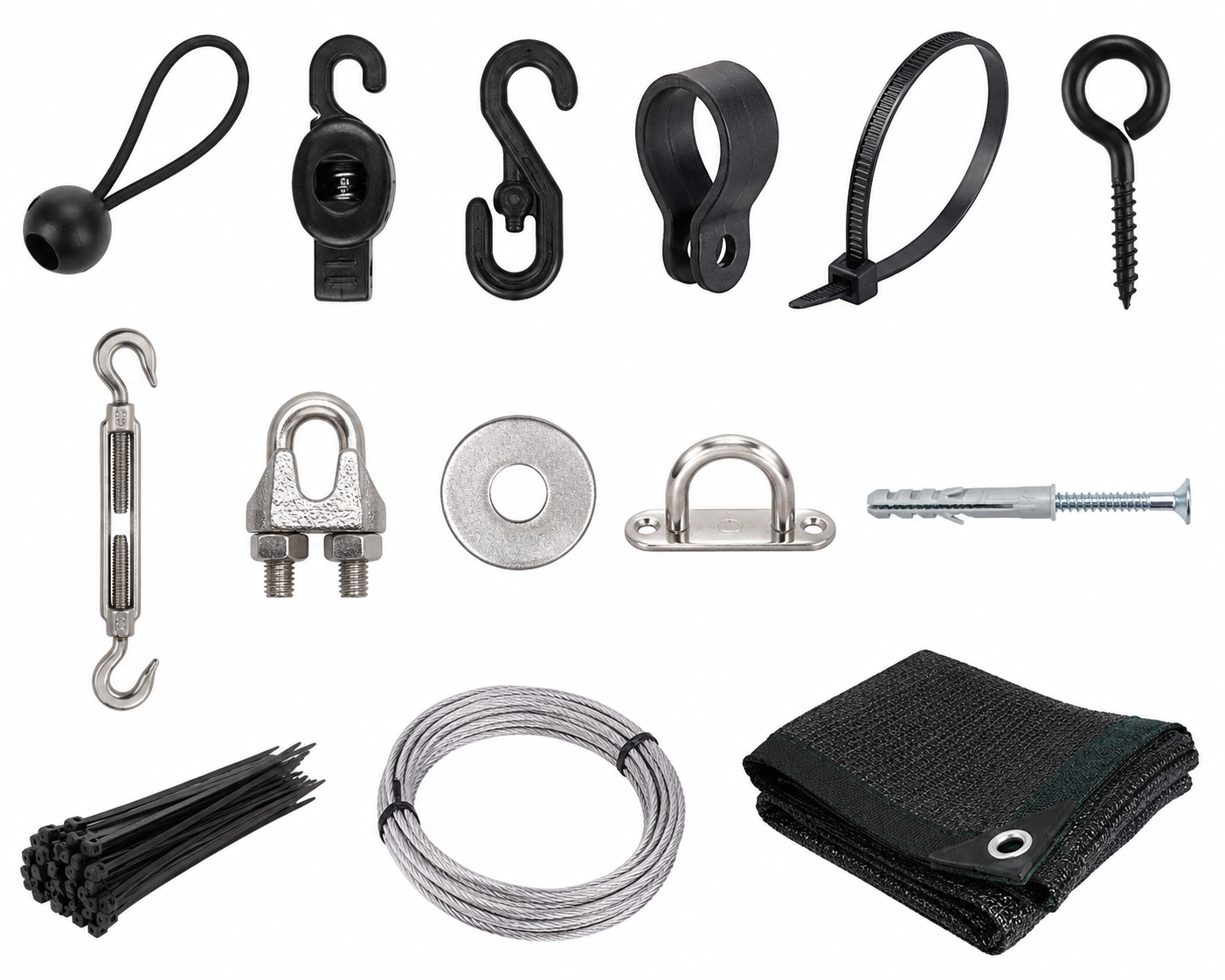
Why Net Fixing Accessories Matter for Strong Net Installations
Net fixing accessories determine how well a net performs after installation because they control tension, stability, and resistance against weather conditions. A premium net can only deliver its full lifespan when supported by properly selected clips, ropes, eyelets, and fastening points.
Across Kenya and East Africa, netting systems are used in agriculture, construction, livestock protection, aquaculture, and outdoor applications. Farmers in Nairobi, Eldoret, Kisumu, and Rift Valley farming regions depend on reliable net installations to protect crops from birds, insects, excessive sunlight, and harsh weather.
Many customers focus on the cost and quality of the net material but underestimate the importance of the accessories holding it in place. Weak net fixing accessories can cause:
- Loose or sagging nets
- Torn edges
- Poor wind resistance
- Frequent repairs
- Reduced service life
For example, a shade net installed on an exposed farm in Eldoret requires stronger fastening compared to a small garden net installed in a sheltered Nairobi compound.
Cougar Nets provides professional netting solutions for farming, construction, home, and industrial applications. Customers can explore available products through the Cougar Nets shop or contact the team for assistance through the Cougar Nets contact page.
Net Fixing Accessories: How Much Do You Need for 100m² of Netting?
The quantity of net fixing accessories required depends mainly on the perimeter of the installation rather than the total square metres alone.
A 100m² net does not always require the same number of accessories because the shape affects the fixing points.
For example:
Example 1: Square 100m² Net
Dimensions:
- Length: 10 metres
- Width: 10 metres
Area:
10m × 10m = 100m²
Perimeter:
10m + 10m + 10m + 10m = 40 metres
This perimeter determines the approximate rope length and number of attachment points.
Example 2: Long Rectangular Net
Dimensions:
- Length: 20 metres
- Width: 5 metres
Area:
20m × 5m = 100m²
Perimeter:
20m + 5m + 20m + 5m = 50 metres
The same surface area requires more fixing accessories because the perimeter is longer.
Net Fixing Accessories Calculation Guide for Rope, Clips and Eyelets
A practical estimate for a 100m² installation may include:
| Accessory | Approximate Quantity | Purpose |
|---|---|---|
| Fixing rope | 50–100 metres | Edge support and tension |
| Clips | 80–150 pieces | Attaching net to structure |
| Eyelets | 50–100 pieces | Reinforced attachment points |
| Washers | Equal to eyelets | Preventing tear damage |
The final quantity depends on:
- Net weight
- Wind exposure
- Installation height
- Support frame design
- Required durability
For commercial installations, buying slightly more accessories than the minimum allows for future repairs and adjustments.
Net Fixing Accessories: How Much Rope Is Needed Per 100m²?
Rope is one of the most important components because it distributes tension around the net edges.
A basic calculation:
Required rope = perimeter measurement + tying allowance
Example:
A 10m × 10m net:
- Perimeter = 40 metres
- Extra allowance for knots and tensioning = 20 metres
Recommended rope:
Approximately 60 metres
For exposed locations, installers may increase rope quantity to create additional support lines.
Good fixing ropes should have:
- High tensile strength
- UV resistance
- Low stretching
- Outdoor durability
This is especially important in Kenya where outdoor materials experience intense sunlight throughout the year.
Net Fixing Accessories: How Many Clips Should You Install?
Clips provide direct attachment between the net and the supporting structure.
The number required depends on spacing.
A common commercial spacing method:
- Clip every 50cm around the perimeter
For a 40-metre perimeter:
40m ÷ 0.5m spacing
= 80 fixing points
Therefore, approximately:
80 clips are required
For high-wind areas:
- Reduce spacing
- Add corner reinforcement
- Increase fixing points
Quality clips prevent:
- Net movement
- Edge tearing
- Structural stress
For agricultural projects requiring specialised protection, Cougar Nets also supplies solutions through the poultry farming netting category.
Net Fixing Accessories: Eyelet Spacing and Washer Requirements
Eyelets strengthen the net at attachment points by preventing ropes or hooks from pulling directly against the fabric.
They are commonly used for:
- Heavy-duty nets
- Tarpaulins
- Agricultural barriers
- Construction protection systems
Recommended spacing:
| Application | Eyelet Spacing |
|---|---|
| Light applications | 1 metre |
| Standard outdoor use | 50–75cm |
| Heavy-duty installations | 30–50cm |
For a 40-metre perimeter:
At 50cm spacing:
40 ÷ 0.5
= 80 eyelets
Each eyelet normally requires a matching washer or reinforcement component.
Choosing Net Fixing Accessories for Kenya Weather Conditions
Kenya has different climates, and accessory selection should match the environment.
Net Fixing Accessories for Nairobi Installations
Nairobi installations experience:
- Strong UV exposure
- Temperature changes
- Dry conditions
Choose accessories with UV resistance to prevent cracking and weakening.
Net Fixing Accessories for Mombasa and Coastal Areas
Coastal projects require materials that handle:
- Humidity
- Salt exposure
- Strong coastal winds
Corrosion-resistant components improve reliability.
Net Fixing Accessories for Rift Valley Farms
Large open farms require stronger systems because of:
- Higher wind exposure
- Large installation areas
- Continuous movement
Farmers should consider stronger ropes, closer clip spacing, and reinforced corners.
Net Fixing Accessories Selection by Industry
Agricultural Netting Applications
Farmers use net fixing accessories for:
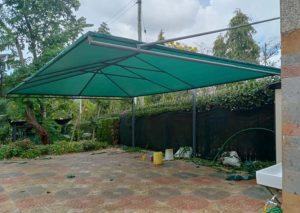
- Shade structures
- Insect protection
- Bird control
- Poultry areas
Proper installation helps maintain crop protection and reduces replacement costs.
Cougar Nets provides additional agricultural solutions including PVC coated rabbit nets in Kenya for livestock and animal enclosure applications.
Construction Netting Applications
Construction companies use fastening systems for:
- Safety barriers
- Dust control
- Privacy screens
- Temporary site protection
Construction environments require stronger fixing methods because wind pressure increases around tall buildings and exposed structures.
For more information on protective construction solutions, see the construction shade nets in Kenya guide.
Home and Garden Netting Applications
Home users may require net fixing accessories for:
- Garden protection
- Outdoor shade areas
- Decorative screens
Smaller projects usually require fewer accessories but still need weather-resistant components.
Customers can explore additional outdoor solutions through the home and garden products category.