No products in the cart.
When purchasing netting for farming, construction, aquaculture, livestock, or industrial projects, many buyers focus on price, GSM, mesh size, and durability. However, one important factor is often overlooked: the net warranty.
A warranty provides confidence that a supplier stands behind the quality of their product. However, many customers misunderstand what a warranty actually means. A guarantee does not mean every type of damage will be replaced free of charge.
Understanding net warranty terms before purchase helps buyers make better decisions and avoid unexpected costs.
For example, a shade net installed incorrectly may fail during strong winds. A construction safety net used outside its recommended purpose may experience damage. A lightweight net selected for a heavy-duty application may wear faster than expected.
These situations are usually related to installation, usage, or product selection rather than manufacturing defects.
Cougar Nets provides professional premium netting solutions in Kenya for agriculture, construction, fishing, livestock protection, and industrial applications. Our team helps customers select suitable net specifications based on their environment and project requirements.
What Is a Net Warranty and What Does It Cover in Kenya?
A net warranty is a supplier’s commitment that a product will meet certain quality standards for a specific period under normal recommended use.
A typical warranty may cover:
- Manufacturing defects
- Material quality issues
- Premature failure caused by production problems
- Incorrect product specifications supplied by mistake
A warranty normally requires that:
- The product was installed correctly
- The net was used for its intended purpose
- Maintenance recommendations were followed
- The damage is verified as a product-related issue
A warranty is designed to protect buyers from genuine product faults, not from every possible type of damage.
Net Warranty Coverage: What Buyers Should Expect
Before purchasing large quantities of netting, customers should ask clear questions about warranty conditions.
| Issue | Usually Covered? | Explanation |
|---|---|---|
| Manufacturing defect | Yes | Product failure caused by production problems |
| Wrong material supplied | Yes | Supplier error in product delivery |
| Poor installation | No | Installation affects product performance |
| Storm or extreme wind damage | Usually No | Weather events are outside product control |
| Wrong application | No | Product must match intended use |
| Normal ageing | Usually No | Outdoor materials naturally experience wear |
Understanding these differences helps customers make realistic expectations about product lifespan and protection.
Why Net Warranty Does Not Usually Cover Wind Damage
One of the most common misunderstandings about net warranty in Kenya involves weather-related damage.
Outdoor nets are exposed to environmental conditions such as:
- Strong winds
- Heavy rainfall
- Direct sunlight
- Dust
- Humidity
Even high-quality nets require proper installation to perform correctly.
For example:
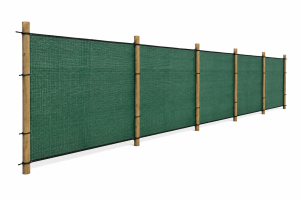
A shade net installed with weak support structures may tear during strong winds. The problem may not be the net material itself but the fixing method.
Professional installation, correct tensioning, and suitable support systems help improve durability.
How Poor Fixing Can Affect Your Net Warranty
Installation quality plays a major role in how long a net lasts.
Poor fixing methods can create:
- Excessive tension points
- Uneven weight distribution
- Weak attachment areas
- Increased tearing risk
Before buying netting, customers should consider:
- Where the net will be installed
- Expected environmental pressure
- Support structure quality
- Recommended fixing accessories
For construction projects, proper installation is especially important because safety and performance depend on correct setup.
Customers looking for construction applications can explore construction shade nets in Kenya for professional site protection solutions.