No products in the cart.
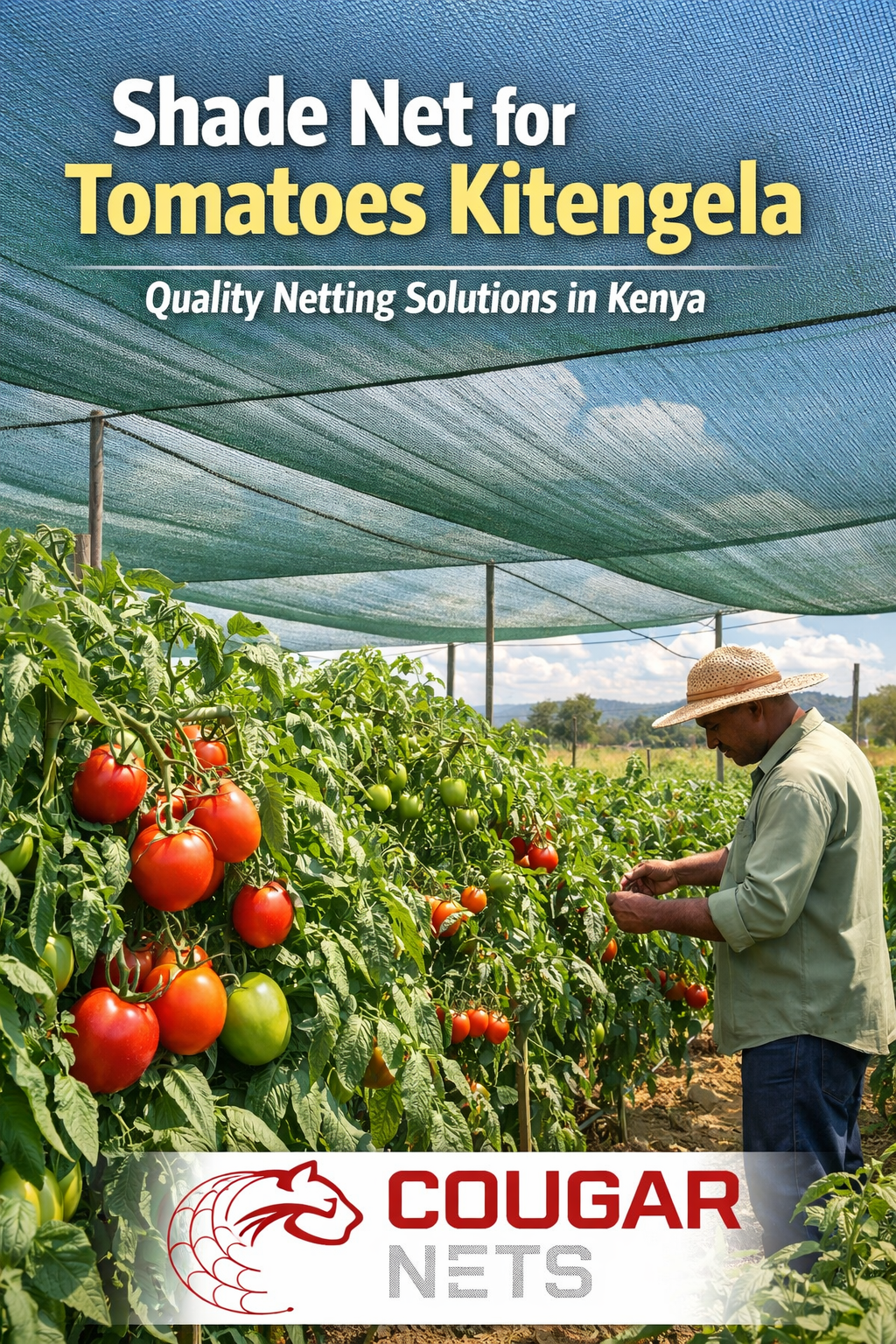
A shade net for tomatoes in Kitengela is a UV-stabilized agricultural covering designed to regulate sunlight, temperature, and moisture in semi-arid conditions. By using the correct GSM and shade percentage, farmers can prevent sunscald, reduce heat stress, and significantly increase tomato yields despite Kajiado’s high temperatures and intense UV exposure.
Shade net for tomatoes Kitengela is no longer an optional investment—it is a critical production input for farmers operating in Kajiado County’s harsh, semi-arid climate. With rising daytime temperatures, unpredictable rainfall, and an increasingly high UV index, open-field tomato farming in Kitengela faces growing yield losses from heat stress, flower drop, and sunscald.
Cougar Nets has established itself as the leading authority on agricultural netting solutions in Kenya and East Africa by supplying precision-engineered shade nets tailored to local climates. This guide is designed as a definitive reference for farmers, agronomists, cooperatives, and agribusinesses seeking evidence-based guidance on choosing the correct GSM and shade factor for tomato farming in Kitengela.
Understanding Tomato Farming Conditions in Kitengela
Kitengela sits in a transition zone between Nairobi’s highlands and Kajiado’s rangelands. This creates unique farming challenges that directly influence shade net selection.
Climate Characteristics Affecting Tomato Production
-
High daytime temperatures: Frequently exceeding 28–32°C during dry seasons
-
Intense solar radiation: Elevated UV index throughout most of the year
-
Low and erratic rainfall: High evapotranspiration rates
-
Strong winds: Increased moisture loss and physical crop stress
Without protection, tomato plants respond by closing stomata, reducing photosynthesis, and aborting flowers. The result is lower fruit set, uneven sizing, and reduced market quality.
A properly specified shade net acts as a microclimate control system rather than just a sun blocker.
Why Shade Nets Are Essential for Tomatoes in Semi-Arid Kajiado
Tomatoes are highly sensitive to light and temperature thresholds. Once exceeded, physiological disorders become inevitable.
Key Problems Solved by Shade Nets
-
Sunscald Prevention
Excessive direct sunlight causes white or yellow patches on tomato fruits, rendering them unmarketable. -
Improved Pollination & Fruit Set
Shade moderates temperature, keeping pollen viable and reducing flower abortion. -
Water Use Efficiency
Reduced evaporation lowers irrigation demand and stabilizes soil moisture. -
Extended Production Cycles
Plants experience less stress, maintaining productivity for longer periods.
Farmers using quality shade nets sourced from the Cougar Nets home page consistently report yield stability even during peak dry months.
GSM Explained: Why It Matters for Tomato Shade Nets
GSM (Grams per Square Meter) defines the material density of a shade net. Higher GSM generally indicates greater durability, UV resistance, and lifespan.
GSM vs Shade Percentage: Clearing the Confusion
GSM does not equal shade percentage. Shade percentage refers to how much sunlight is blocked, while GSM reflects material strength.
| Shade Percentage | Typical GSM Range | Light Reduction | Suitability for Tomatoes |
|---|---|---|---|
| 30–40% | 120–180 GSM | Mild | Stress reduction only |
| 40–50% | 180–240 GSM | Moderate | Optimal for Kitengela |
| 55–60% | 240–320 GSM | High | Heat waves / nurseries |
| 70%+ | 320 GSM+ | Very high | Not recommended |
For Kitengela, the balance between light and heat control is critical.
40% vs 55% Shade Nets: Which Is Best for Tomatoes in Kitengela?
This is the most common decision farmers struggle with.
40% Shade Net for Tomatoes
A 40% shade net reduces solar intensity while still allowing high photosynthetic activity.
Advantages
-
Maintains strong vegetative growth
-
Suitable for cooler months
-
Lower cost per square meter
Limitations
-
May not adequately prevent sunscald during extreme heat
-
Less effective during prolonged dry seasons
55% Shade Net for Tomatoes
A 55% shade net provides stronger protection against heat stress and UV damage.
Advantages
-
Excellent sunscald prevention
-
Stabilizes temperatures during heat waves
-
Reduces irrigation frequency
Limitations
-
Slightly reduced light levels
-
Requires proper ventilation design
For most Kitengela farms, agronomic trials show that 55% shade nets offer more consistent yields across seasons, especially when combined with drip irrigation.
Recommended Shade Net Specifications for Kitengela Tomatoes
Based on field performance, Cougar Nets recommends the following minimum specifications:
-
Shade factor: 50–55%
-
Material: UV-stabilized HDPE
-
GSM: 200–320 GSM
-
Color: Green (balanced light diffusion)
The 80% GSM shade net range is commonly used for multi-crop applications, but tomato farmers should prioritize shade percentage over maximum density.
HDPE vs PVC Shade Nets for Tomato Farming
Material choice directly affects durability and return on investment.
| Feature | HDPE Shade Nets | PVC Nets |
|---|---|---|
| UV Resistance | Excellent | Moderate |
| Heat Tolerance | High | Lower |
| Lifespan | 3–7 years | 2–4 years |
| Flexibility | High | Lower |
| Suitability for Kitengela | Ideal | Not recommended |
All agricultural shade nets supplied under the Cougar Nets shade nets category are manufactured from UV-stabilized HDPE suitable for high-UV regions like Kajiado.
Installation of Shade Nets for Tomato Farming
Correct installation is just as important as correct GSM.
Structural Considerations
-
Galvanized steel or treated timber poles
-
Height of 2.5–3 meters for ventilation
-
Tensioned installation to prevent sagging
For larger commercial setups, farmers often integrate nets with materials such as nylon ropes for secure anchoring.
Open-Side vs Fully Enclosed Structures
-
Open-sided: Better airflow, lower cost
-
Fully enclosed: Higher pest control, higher initial investment
When pest pressure is high, combining shade nets with insect nets dramatically reduces whiteflies and aphids.
Integrating Shade Nets with Pest and Bird Control
Shade nets are most effective when combined with complementary netting systems.
Bird Damage in Tomato Farms
Birds peck ripe tomatoes, causing direct losses. Installing anti-bird nets along the sides of shade structures protects fruit quality.
Livestock & Poultry Interference
In mixed farming areas around Kitengela, poultry mesh barriers such as plastic poultry mesh help protect tomato plots from free-range animals.
Economic Impact: Yield and ROI Under Shade Nets
Yield Improvements Observed
Farmers using correctly specified shade nets report:
-
20–40% increase in marketable yields
-
Reduced fruit cracking
-
More uniform sizing
Cost vs Benefit Analysis
| Item | Open Field | Shade Net System |
|---|---|---|
| Yield Stability | Low | High |
| Water Use | High | Reduced |
| Sunscald Losses | Frequent | Minimal |
| ROI Period | N/A | 1–2 seasons |
The long lifespan of quality nets makes them capital assets rather than recurring expenses.
Compliance, eTIMS & Business Documentation
All purchases from Cougar Nets are supported by valid eTIMS-compliant invoices, enabling:
-
Tax-deductible farm expenses
-
Compliance with Kenya Revenue Authority requirements
-
Transparent accounting for agribusinesses and cooperatives
This is particularly important for farmers supplying formal markets, exporters, or institutional buyers.
Sourcing Quality Shade Nets in Kenya
Not all shade nets in the market meet agricultural performance standards. Inferior nets degrade rapidly under Kajiado’s UV exposure, leading to false economies.
By purchasing directly through the Cougar Nets shop, farmers access:
-
Verified GSM specifications
-
UV-stabilized materials
-
Expert technical guidance
For tailored recommendations, the Contact Us page connects farmers directly with netting specialists.
Future-Proofing Tomato Farming in Kitengela
Climate variability is increasing. Shade nets are no longer just protective accessories—they are strategic climate adaptation tools.
Forward-thinking farmers are integrating:
-
Shade nets for heat control
-
Insect nets for pest exclusion
-
Drip irrigation for water efficiency
This integrated approach positions tomato farming in Kitengela as a sustainable, profitable agribusiness rather than a high-risk venture.
Get Your Premium Netting Solutions Today!
For the best quality netting solutions for farming, construction, home, or any other project, look no further than Cougar Nets. Our team of experts is ready to help you choose the perfect product for your needs.
NATIONWIDE & EAST AFRICA DELIVERY AVAILABLE
Premium quality nets for all applications
Professional installation and expert advice
Bulk orders and custom solutions available
Serving Kenya (Nairobi, Eldoret, Kisumu), Uganda, Tanzania, Rwanda, South Sudan, Ethiopia and beyond.
Contact Us for a Quote:
Cougar Nets
Email: sales@cougarnets.com | info@cougarnets.com
Phone: +254 706 903 465
Visit Us: Darosa Plaza, Karen Rd, Nairobi
Website: https://cougarnets.co.ke