No products in the cart.
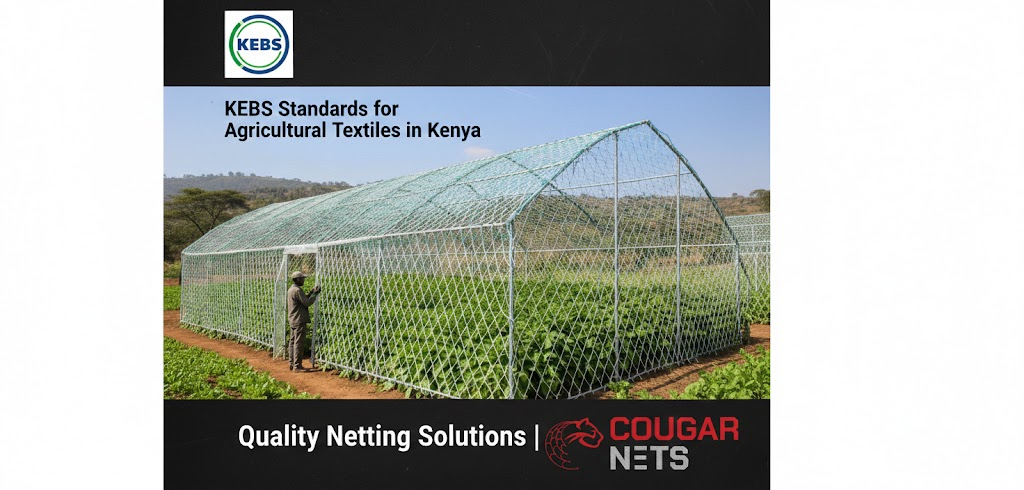
KEBS standards for agricultural textiles in Kenya define the quality, safety, and performance requirements for nets, mesh, and fabric-based farm inputs used in crop protection, livestock management, and aquaculture. Compliance with these standards ensures durability under Kenya’s high UV conditions, supports export acceptance, and protects farmers from counterfeit or substandard products.
KEBS standards for agricultural textiles in Kenya are no longer optional in 2026. As regulatory enforcement tightens and agribusiness becomes more export-oriented, compliance has become a core requirement for farmers, contractors, and suppliers seeking long-term operational stability. Cougar Nets operates within this regulatory framework, supplying compliant agricultural netting solutions backed by verifiable quality controls and valid eTIMS documentation.
KEBS Standards for Agricultural Textiles in Kenya Explained
KEBS (Kenya Bureau of Standards) is the national authority responsible for setting and enforcing product standards across industries. For agricultural textiles, KEBS focuses on materials used in direct contact with crops, animals, and farm infrastructure, including shade nets, insect nets, poultry mesh, anti-bird nets, and fish pond covers.
These standards are designed to ensure that agricultural textiles meet minimum thresholds for tensile strength, UV resistance, mesh uniformity, chemical safety, and lifespan. Products that fail these benchmarks pose risks such as premature degradation, crop contamination, or non-compliance with export regulations.
In the Kenyan context, where farms operate under intense sunlight, fluctuating temperatures, and variable rainfall, KEBS-compliant textiles are critical for consistent performance.
Why KEBS Compliance Is Critical for Farmers and Agribusinesses in 2026
KEBS standards for agricultural textiles in Kenya now intersect directly with tax compliance, export eligibility, and buyer audits. In 2026, non-compliant textiles increasingly expose businesses to operational and financial risk.
Key reasons compliance matters include:
-
Increased market surveillance by KEBS and county authorities
-
Alignment with GlobalG.A.P and export buyer requirements
-
Compatibility with eTIMS-supported invoicing for tax deductions
-
Protection against counterfeit agricultural netting products
Suppliers such as Cougar Nets structure their procurement and distribution systems to ensure that products like agricultural shade nets and insect exclusion systems meet applicable KEBS benchmarks while remaining practical for Kenyan farm conditions.
Agricultural Textiles Covered Under KEBS Standards
KEBS standards apply across multiple categories of agricultural textiles commonly used in Kenya. These include products available through Cougar Nets’ Home & Garden and Animals & Pet Supplies ranges.
Shade Nets
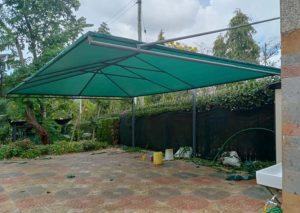
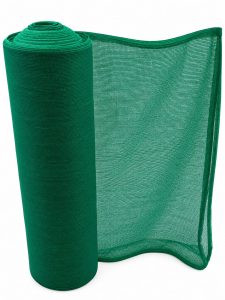
Shade nets are evaluated based on GSM rating, UV stabilization, tensile strength, and light filtration accuracy. Products such as the 80% GSM shade net are designed to meet these benchmarks while supporting crop yield optimization in regions like Naivasha, Thika, and Eldoret.
Insect Nets
Insect nets must meet mesh consistency and durability standards to ensure effective pest exclusion without compromising airflow. High-density insect nets are particularly critical for export farms targeting residue reduction and MRL compliance.
Poultry Mesh
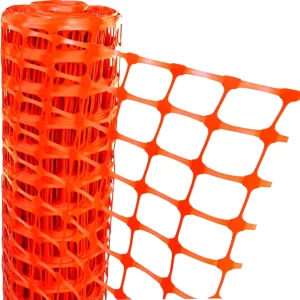
Poultry mesh standards focus on load-bearing capacity, resistance to tearing, and weather durability. Products such as heavy-duty poultry mesh are designed for long-term use in open and semi-enclosed poultry systems.
Anti-Bird Nets
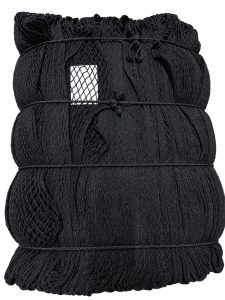
Anti-bird nets are assessed on knot integrity, UV resistance, and mesh sizing to prevent crop loss without trapping wildlife. These nets are widely used in fruit farms across Central and Eastern Kenya.
Fish Pond Covers
Aquaculture textiles, including fish pond cover nets, must withstand moisture, UV exposure, and mechanical stress while maintaining consistent mesh integrity.
Technical Performance Benchmarks Under KEBS
The following table outlines typical performance criteria evaluated under KEBS-aligned quality checks for agricultural textiles:
| Parameter | KEBS Expectation | Practical Impact |
|---|---|---|
| GSM Rating | Verified within tolerance | Predictable shading and strength |
| UV Resistance | Stabilized HDPE materials | Extended lifespan in high-UV zones |
| Tensile Strength | Minimum load thresholds | Reduced tearing and failure |
| Mesh Uniformity | Consistent spacing | Effective pest and bird exclusion |
| Chemical Safety | Non-toxic materials | Safe crop and livestock interaction |
Cougar Nets sources agricultural textiles that meet these performance indicators, ensuring suitability for both domestic and export-oriented farms.
KEBS Standards and Export Agriculture in Kenya
KEBS standards for agricultural textiles in Kenya are increasingly referenced during export audits, particularly for fresh produce destined for the EU, UK, and Middle East markets. While KEBS does not regulate Maximum Residue Limits directly, compliant textiles support integrated pest management strategies that reduce chemical dependency.
Export farms using KEBS-compliant insect nets and shade systems demonstrate better alignment with:
-
KEPHIS inspection requirements
-
GlobalG.A.P audits
-
Buyer-specific sustainability criteria
This is particularly relevant for horticultural exporters in regions such as Murang’a, Meru, and Kirinyaga, where insect pressure and climate stress are high.
eTIMS, KEBS, and Tax Compliance Alignment
In 2026, KEBS compliance is closely tied to financial documentation. All purchases of agricultural textiles from compliant suppliers must be supported by valid eTIMS invoices to qualify for VAT input claims and tax deductions.
Cougar Nets ensures that every transaction is supported by eTIMS-compliant invoicing, providing agribusinesses with:
-
Audit-ready procurement records
-
Verified supplier traceability
-
Reduced risk during KRA reviews
This alignment between KEBS standards and eTIMS compliance is particularly important for corporate farms, cooperatives, and NGOs operating at scale.
Identifying KEBS-Compliant Agricultural Textiles
Farmers and contractors can identify compliant products by evaluating several indicators:
-
Clear GSM and material specifications
-
UV stabilization disclosure
-
Consistent mesh structure
-
Supplier transparency and documentation
Purchasing from established suppliers such as Cougar Nets reduces exposure to counterfeit or substandard imports that often fail prematurely under Kenyan conditions.
Risks of Using Non-Compliant Agricultural Textiles
Failure to adhere to KEBS standards for agricultural textiles in Kenya can result in:
-
Increased replacement costs due to early degradation
-
Crop losses from ineffective pest or bird control
-
Export rejection or audit penalties
-
Ineligibility for tax deductions
These risks are amplified in large-scale operations where textile failure affects significant acreage or livestock populations.
Regional Performance Considerations in Kenya
Agricultural textiles must perform reliably across diverse Kenyan climates:
-
Nairobi & Central Highlands: High UV exposure and temperature variation
-
Rift Valley: Wind stress and large-scale coverage requirements
-
Coastal Regions: Salt air resistance for aquaculture and shade systems
-
Western Kenya: High humidity and pest pressure
KEBS-compliant HDPE textiles are engineered to withstand these conditions more effectively than generic imports.
Why Cougar Nets Is a Trusted KEBS-Aligned Supplier
Cougar Nets positions itself as a compliance-focused supplier by offering agricultural textiles that align with KEBS performance expectations and practical farm needs. Through its Shop platform, farmers can access verified products across multiple categories, supported by expert guidance and nationwide delivery.
By integrating quality control, regulatory awareness, and eTIMS-backed documentation, Cougar Nets supports sustainable agribusiness growth across Kenya and East Africa.
Frequently Asked Questions on KEBS Agricultural Textile Standards
Are KEBS standards mandatory for all agricultural nets?
KEBS standards apply to regulated products sold commercially in Kenya. Enforcement is increasing, particularly for large-scale and export-linked operations.
Do KEBS-compliant nets guarantee export approval?
While KEBS compliance supports quality assurance, export approval also depends on KEPHIS, buyer standards, and overall farm practices.
Can smallholder farmers benefit from compliant textiles?
Yes. Durable, compliant nets reduce replacement costs and improve productivity even for small-scale farms.
Building Compliance-Ready Farms in 2026
KEBS standards for agricultural textiles in Kenya form a foundational layer of modern, compliant farming. As regulatory oversight, export scrutiny, and tax enforcement increase, farmers and agribusinesses must prioritize verified quality inputs.
By sourcing KEBS-aligned agricultural textiles supported by valid eTIMS invoices, Kenyan farms protect their investments, improve operational resilience, and position themselves for long-term growth.
Get Your Premium Netting Solutions Today
For the best quality netting solutions for farming, construction, home, or any other project, look no further than Cougar Nets. Our team of experts is ready to help you choose the perfect product for your needs.
Nationwide & East Africa delivery available.
Premium quality nets for all applications.
Professional installation and expert advice.
Bulk orders and custom solutions available.
Serving Kenya (Nairobi, Eldoret, Kisumu), Uganda, Tanzania, Rwanda, South Sudan, Ethiopia, and beyond.
Contact Us for a Quote
Email: sales@cougarnets.com | info@cougarnets.com
Phone: +254 706 903 465
Visit: Darosa Plaza, Karen Rd, Nairobi
Website: https://cougarnets.co.ke/