No products in the cart.
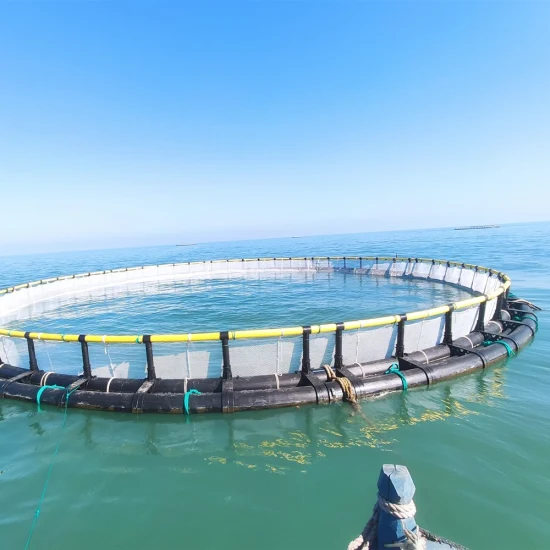
Circular Fish Cages in Kenya: A Smarter Investment for Aquaculture
Aquaculture is transforming food production and agribusiness returns across Kenya. As demand for farmed fish—particularly tilapia—continues to rise, farmers are adopting circular fish cages Kenya to increase yields, reduce losses, and improve long-term profitability.
Unlike traditional square or rectangular cages, circular fish cages are engineered for better water flow, healthier fish behavior, and stronger structural performance. These advantages directly impact fish farming ROI Kenya, making circular cages the preferred choice for modern cage farming operations.
Internal Link: Explore our tilapia cage farming Kenya guide for practical setup tips.
What Are Circular Fish Cages?
Circular fish cages are floating aquaculture systems designed for lakes, dams, and reservoirs. Most are built using HDPE (high-density polyethylene) frames with durable netting suspended below the water surface.
Key design advantages:
-
Round shape promotes natural water circulation, reducing stagnant zones.
-
Oxygen is evenly distributed, supporting higher stocking densities.
-
Fish behavior aligns with circular movement, reducing stress and injury.
These features make circular cages a smart choice for commercial aquaculture cages in Kenya.
Key Fish Cage Benefits of Circular Systems
1. Superior Water Circulation and Oxygen Flow
Continuous water movement flushes out waste and uneaten feed, reduces ammonia buildup, and maintains stable oxygen levels.
For cage fish farming in Kenya, where water quality fluctuates seasonally, this benefit alone can reduce mortality rates and improve production efficiency.
Internal Link: Learn more about aquaculture cages Kenya water management.
2. Improved Fish Health and Growth Rates
Fish naturally swim in circular patterns. Circular cages align with this behavior, reducing stress and physical injuries.
Benefits include:
-
Faster growth cycles
-
Uniform harvest sizes
-
Lower disease incidence
Tilapia production benefits significantly, as consistency directly affects market value.
3. Stronger and More Durable Cage Structures
Most circular aquaculture cages in Kenya are constructed with HDPE, offering:
-
UV resistance and corrosion protection
-
Flexibility against waves and currents
-
A lifespan of 15–20 years or more
Lower repair and replacement costs translate to better long-term returns for farmers.
Internal Link: Browse our HDPE fish cages Kenya for durable options.
How Circular Fish Cages Improve Fish Farming ROI in Kenya
While circular cages may require a higher initial investment than traditional cages, they consistently outperform them financially over time.
Key ROI drivers:
-
Higher stocking capacity without compromising fish welfare
-
Better feed conversion ratios (FCR), reducing feed costs
-
Lower losses from disease, stress, or structural failure
-
Shorter grow-out periods, enabling more production cycles annually
Feed is the largest operational cost in aquaculture. Improved FCR alone can significantly increase fish farming ROI Kenya.
Ideal Applications for Circular Fish Cages
Circular fish cages are best suited for:
-
Large lakes and reservoirs
-
Commercial and export-focused farms
-
Farmer cooperatives or investor-led projects
-
Operations transitioning from pond farming
They also integrate with automated feeders, monitoring systems, and modular expansion plans, enabling scalable growth.
Internal Link: Discover cage fish farming equipment Kenya for scalable operations.
Why Circular Fish Cages Are the Future of Aquaculture in Kenya
As Kenyan aquaculture becomes more competitive, efficiency and reliability are essential. Circular fish cages offer:
-
Predictable production outcomes
-
Higher-quality fish for premium markets
-
Scalable infrastructure for long-term growth
For farmers focused on sustainability and profitability, circular cages represent a future-proof investment.
Conclusion
Circular fish cages Kenya provide measurable advantages in:
-
Water quality management
-
Fish health and growth
-
Structural durability
-
Overall profitability
Whether launching a new tilapia cage farming Kenya venture or upgrading existing systems, circular cages deliver strong returns and sustainable production.
With rising demand for farmed fish and pressure to optimize operational costs, circular fish cages are no longer a luxury—they’re a smart business decision for modern aquaculture.
Internal Links Recap:
Get Your Premium Netting Solutions Today!
For the best quality netting solutions for farming, construction, home, or any other project, look no further than Cougar Nets. Our team of experts is ready to help you choose the perfect product for your needs.
NATIONWIDE & EAST AFRICA DELIVERY AVAILABLE
- Premium quality nets for all applications
- Professional installation and expert advice
- Bulk orders and custom solutions available
- Serving Rwanda, Ethiopia, Tanzania and beyond.
Contact Us for a Quote:
Cougar Nets
Email: sales@mft.co.ke | info@cougarnets.co.ke
Phone: +254 706 903 465
Visit Us: Darosa Plaza, Karen Rd, Nairobi
Website: https://cougarnets.co.ke/