No products in the cart.
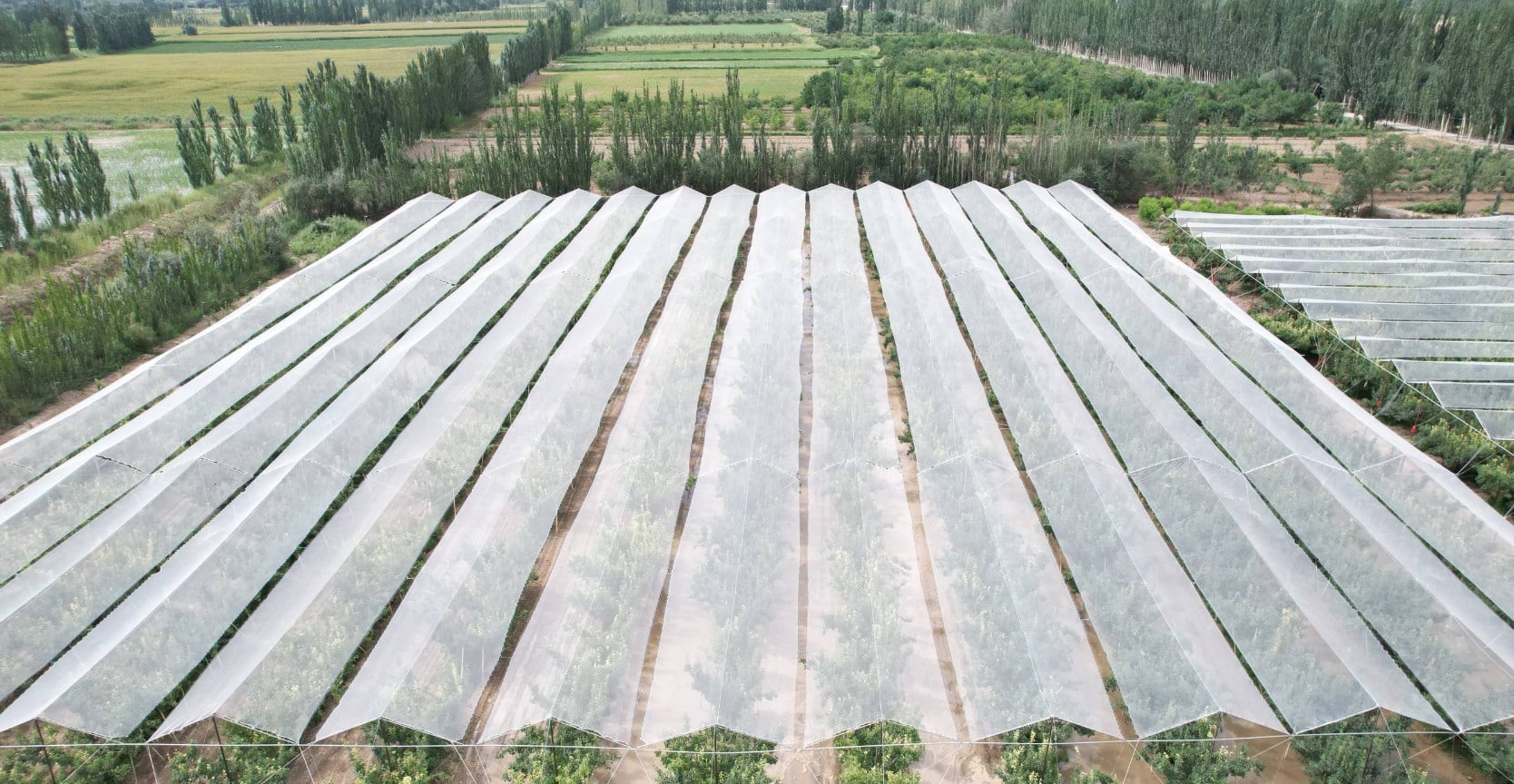
Anti-hail net GSM determines the strength, density and impact resistance of agricultural netting used to protect crops from damaging hailstorms. In Kenya and East Africa, the correct anti-hail net GSM and mesh combination helps farmers protect high-value crops from hailstones up to 20mm while maintaining airflow, sunlight balance and long-term durability.
Why Anti-Hail Net GSM Matters for Kenyan Farmers
A sudden hailstorm can destroy months of agricultural investment within minutes. For farmers growing avocados, flowers, vegetables and nursery plants in Kenya’s highland regions, choosing the correct anti-hail net GSM is an important part of modern crop protection.
GSM (grams per square metre) indicates the weight and density of the net material. However, effective hail protection depends on more than weight alone. The mesh opening, yarn strength, UV stabilisation and installation design all determine whether a net can absorb impact from falling hailstones.
In regions such as Nakuru, Nyeri, Eldoret, Kericho and Meru, hail events can affect commercial farms during rainy seasons. A correctly specified anti-hail net helps reduce:
- Fruit bruising
- Leaf damage
- Flower destruction
- Reduced crop quality
- Export losses
Cougar Nets provides professional netting solutions for agricultural, construction and industrial applications across Kenya and East Africa. Farmers and commercial growers can access reliable products designed for demanding outdoor environments.
For complete agricultural protection solutions, explore agricultural netting solutions in Kenya designed for different farming applications.
Anti-Hail Net GSM: Understanding Strength and Impact Resistance
Anti-hail net GSM refers to the weight of the net fabric measured in grams per square metre. A higher GSM generally indicates a denser and stronger net, but the final hail protection performance depends on the combination of GSM, mesh size, material quality and installation.
Many farmers assume that the heaviest net is always the best option. While GSM is an important specification, it must be matched with the actual hail risk and crop requirements.
A professional anti-hail protection system considers:
- Expected hailstone size
- Crop sensitivity
- Farm location
- Wind exposure
- Support structure
- Required lifespan
What Does GSM Mean in Anti-Hail Nets?
GSM measures the amount of material used in one square metre of netting.
A higher GSM anti-hail net usually provides:
| Feature | Higher GSM Net Advantage |
|---|---|
| Material density | More yarn material per square metre |
| Strength | Better resistance to impact and tension |
| Durability | Longer outdoor performance |
| Wind resistance | Improved structural stability |
| Protection | Better suited for demanding applications |
However, GSM should not be considered separately. A poorly designed high GSM net may still perform poorly if the mesh size is unsuitable.
How Anti-Hail Net GSM Stops a 20mm Hailstone
An anti-hail net protects crops by absorbing and spreading the energy of falling hailstones before they reach plants. The correct anti-hail net GSM and mesh structure allow the net to flex during impact instead of tearing or allowing stones through.
A 20mm hailstone may appear small, but its impact force increases as it falls from height.
When hail reaches a crop directly, it can cause:
- Broken stems
- Damaged fruit surfaces
- Torn leaves
- Reduced plant growth
- Lower market value
A quality anti-hail net works through energy management.
How the Net Absorbs Hail Impact
1. Mesh Intercepts the Hailstone
The first protection layer is the mesh design. The opening size determines whether the hailstone is stopped before reaching the crop.
2. Yarn Distributes Force
The yarn structure spreads impact across a wider area instead of allowing one point to absorb the entire force.
3. Net Flexibility Reduces Damage
A flexible net absorbs energy through controlled movement.
4. Crop Remains Protected
The hailstone loses momentum before reaching leaves, flowers or fruit.
This is why farmers should evaluate the complete system rather than buying based only on appearance or price.
Anti-Hail Net GSM and Mesh Size: Choosing the Right Combination
Anti-hail net GSM and mesh size work together to determine whether a net can stop hail effectively. The correct mesh must prevent hail penetration while maintaining airflow, light transmission and healthy crop conditions.
Mesh size refers to the opening between the net strands. It affects:
- Hail protection level
- Ventilation
- Weight
- Light penetration
- Crop environment
Anti-Hail Mesh Size Considerations
| Requirement | Mesh Consideration |
|---|---|
| Small hail protection | Fine mesh structure |
| 20mm hailstone protection | Strong mesh with suitable GSM |
| Commercial farming | Durable UV-stabilised mesh |
| Long-term outdoor use | Weather-resistant material |
Farmers should avoid using general-purpose nets where hail protection is the main objective.
A shade net, garden mesh or ordinary agricultural net may provide some environmental benefits but may not withstand hail impact.
For farms needing additional climate control, farmers can combine hail protection with shade nets for agricultural applications.
Choosing Anti-Hail Net GSM for Different Crops in Kenya
The ideal anti-hail net GSM depends on crop value, growing conditions and exposure to severe weather. High-value crops usually require stronger protection because a single hailstorm can create major financial losses.
Avocado Farming
Kenya’s avocado industry depends heavily on fruit quality.
Hail damage can affect:
- Fruit appearance
- Export grading
- Market prices
- Future production
Commercial avocado farmers often invest in stronger anti-hail protection because protecting quality is more valuable than replacing damaged harvests.
Flower Farming
Kenya is known for commercial flower production, especially in highland areas.
Anti-hail nets help protect:
- Flower quality
- Plant structure
- Production consistency
For flower farms, the selected net must balance protection with sunlight and airflow requirements.
Vegetable Farming
Vegetables are highly vulnerable to hail because leaves and young plants can be damaged quickly.
Common crops include:
- Tomatoes
- French beans
- Cabbage
- Lettuce
- Capsicum
A suitable anti-hail net GSM helps farmers maintain consistent production.
Anti-Hail Net GSM Comparison: Lightweight vs Heavy-Duty Protection
The correct anti-hail net GSM specification depends on the farming environment. Lightweight nets may suit lower-risk applications, while heavy-duty options are preferred for commercial farms exposed to frequent hailstorms.
| Factor | Lightweight Net | Heavy-Duty Anti-Hail Net |
|---|---|---|
| Material density | Lower | Higher |
| Cost | Lower initial investment | Higher investment |
| Impact resistance | Limited | Stronger |
| Suitable for | Small-scale protection | Commercial farming |
| Lifespan | Shorter in harsh conditions | Longer with maintenance |
Choosing the wrong specification may result in:
- Net replacement costs
- Crop damage
- Reduced farm productivity
Farmers should consider the total cost of ownership rather than only purchase price.
Anti-Hail Net GSM Installation Guide for Kenyan Farms
Correct installation is essential for an anti-hail net GSM system to absorb hail impact effectively and provide long-term crop protection. Even a high-quality net can fail if the support structure, tension, anchoring and coverage are not properly designed.
Selecting the correct anti-hail net GSM is only part of creating a reliable hail protection system. The installation method determines how the net behaves when hit by hailstones, strong winds and seasonal weather changes.
A professionally installed anti-hail net system should:
- Cover the complete crop area
- Maintain balanced tension
- Allow controlled net movement during impact
- Prevent hailstones from reaching crops
- Withstand wind pressure
- Remain stable throughout the farming season
For farms in Kenya’s hail-prone regions, installation should consider local environmental conditions.
Examples:
- Nakuru and Eldoret: Strong winds and seasonal storms require stable support systems.
- Nyeri and Meru: Highland hail conditions require effective impact protection.
- Mombasa and coastal regions: UV exposure and humidity require weather-resistant materials.
How to Install Anti-Hail Net GSM Systems Correctly
An anti-hail net GSM installation requires proper planning, strong support structures and correct tensioning. The goal is to create a protective layer that absorbs hail impact while allowing crops to grow naturally underneath.
Step 1: Assess the Farm and Weather Risk
Before installation, farmers should evaluate:
- Crop type
- Farm size
- Hail frequency
- Wind direction
- Tree or crop height
- Expected production period
A small vegetable farm may require a different system compared with a large avocado orchard.
Step 2: Select the Correct Support Structure
The support structure carries the weight of the net and transfers environmental forces safely.
Common support options include:
- Galvanised steel poles
- Treated timber posts
- Strong cables
- Anchoring wires
- Structural frames
The support system must handle:
- Net weight
- Wind pressure
- Rainwater load
- Repeated hail impact
Step 3: Install the Net With Correct Tension
A loose net may sag excessively and fail to provide proper protection.
A correctly tensioned anti-hail net:
- Absorbs impact better
- Reduces tearing risk
- Maintains consistent coverage
- Improves lifespan
Step 4: Inspect Before Hail Season
Farmers should check:
- Damaged sections
- Loose fixing points
- Broken support wires
- Excessive sagging
Early repairs prevent larger failures.
Anti-Hail Net GSM Prices in Kenya: What Affects Cost?
Anti-hail net GSM prices in Kenya depend on GSM rating, mesh size, UV protection, roll dimensions and installation requirements. Farmers should compare durability and protection value rather than choosing only the lowest purchase price.
The cost of an anti-hail net system is influenced by several factors.
1. GSM Rating
The GSM affects the amount of material used in manufacturing.
Higher GSM nets generally provide:
- Stronger yarn construction
- Better impact resistance
- Improved outdoor durability
However, the correct choice depends on the farming application.
2. Mesh Specification
A specialised hail protection mesh may cost more because it requires:
- Better manufacturing precision
- Stronger yarn arrangement
- Improved impact performance
3. UV Stabilisation
Kenyan farms experience intense sunlight throughout the year.
UV-resistant nets perform better because they reduce:
- Fibre weakening
- Brittleness
- Early deterioration
4. Installation Requirements
Large farms require additional components such as:
- Posts
- Cables
- Fasteners
- Labour
- Structural supports
A complete protection system should include both the net and the installation design.
Anti-Hail Net GSM Selection for Highland Kenya Farming
Highland farming regions in Kenya require careful anti-hail net GSM selection because hailstorms can occur alongside strong winds and changing weather conditions. The correct specification protects valuable crops without reducing productivity.
Nakuru County
Nakuru has extensive commercial farming activities, including:
- Vegetables
- Flowers
- Fruits
- Greenhouse production
Farmers should consider nets with:
- Strong UV resistance
- Reliable impact absorption
- Good airflow
Nyeri and Central Kenya
These areas are important for:
- Avocado farming
- Tea-related agriculture
- Horticultural production
Hail protection helps maintain fruit quality and reduce losses.
Eldoret and Rift Valley
Large agricultural operations in Eldoret require durable systems because farms may experience:
- Wind exposure
- Seasonal storms
- Large cultivated areas
Meru Farming Region
Meru’s fruit farming sector benefits from reliable protection, especially for high-value crops.
Anti-Hail Net GSM vs Shade Net: Which One Should Farmers Choose?
Anti-hail nets and shade nets solve different agricultural problems. Anti-hail net GSM focuses on impact protection, while shade nets focus on controlling sunlight, heat and environmental stress.
| Feature | Anti-Hail Net | Shade Net |
|---|---|---|
| Main purpose | Protect against hail impact | Reduce heat and sunlight |
| Impact resistance | High | Low to moderate |
| Mesh design | Built for hail protection | Built for shading |
| Crop protection | Prevents physical damage | Controls growing environment |
| Common use | Hail-prone farms | Hot climates and nurseries |
Farmers should not replace anti-hail nets with ordinary shade nets where hail protection is required.
For farms requiring additional environmental control, Cougar Nets provides related solutions through shade nets for agricultural applications.
Anti-Hail Net GSM Maintenance Guide for Long-Term Performance
Regular inspection helps maintain anti-hail net GSM performance and extends the useful life of the investment. Farmers should check their systems before and after severe weather events.
A maintenance programme should include:
Regular Visual Checks
Inspect for:
- Tears
- Loose areas
- Damaged edges
- Weak support points
Cleaning and Care
Dust and farm residues can reduce:
- Light transmission
- Air movement
- Overall efficiency
Repair Small Damage Quickly
Small holes can become larger due to:
- Wind movement
- Continuous tension
- Additional storms
Quick repairs protect the rest of the system.
Anti-Hail Net GSM Buying Checklist for Farmers
Choosing the right anti-hail net GSM requires evaluating crop value, hail risk, local climate and expected lifespan. A professional supplier helps farmers select a solution that matches their specific needs.
Before purchasing, consider:
Crop Value
Higher-value crops usually justify stronger protection.
Examples:
- Export avocado
- Roses
- Greenhouse vegetables
- Nursery plants
Weather Conditions
Consider:
- Hail frequency
- Wind exposure
- UV intensity
- Rainfall patterns
Supplier Experience
A reliable supplier should provide guidance on:
- GSM selection
- Mesh choice
- Installation requirements
- Application suitability
Cougar Nets supplies professional netting solutions for agricultural, industrial and commercial applications throughout Kenya and East Africa.
Farmers can also explore poultry farming netting solutions for additional agricultural protection requirements.
Anti-Hail Net GSM Applications Beyond Crop Farming
Although mainly used for agriculture, quality netting systems support multiple industries where protection, durability and weather resistance are required.
Nursery Operations
Young plants require protection from:
- Weather damage
- Physical impact
- Environmental stress
Livestock Protection
Farmers may combine different netting systems for animal housing and farm management.
Related solutions include PVC coated rabbit nets in Kenya.
Aquaculture and Marine Applications
Durable netting is also important in fish farming and aquatic industries.
Businesses requiring specialised equipment can explore fishing and aquaculture equipment in Kenya.
Expert Recommendation: Do Not Choose Anti-Hail Net GSM by Price Alone
The best anti-hail net GSM solution balances strength, durability, crop requirements and local weather conditions. Choosing the correct specification reduces crop risk and improves long-term farm returns.
A cheap net may save money initially but create higher costs through:
- Frequent replacement
- Crop damage
- Reduced harvest quality
- Lost income opportunities
Professional guidance ensures farmers select a system designed for their actual conditions.
For customised recommendations, farmers can contact Cougar Nets for custom netting solutions based on crop type, farm location and protection requirements.
Anti-Hail Net GSM: Final Buying Guide for Kenyan Farmers
Choosing the right anti-hail net GSM requires more than selecting a heavy net. Farmers must consider hailstone size, mesh structure, UV resistance, crop value, installation quality and local weather conditions to achieve reliable crop protection.
For farmers protecting valuable crops in Kenya, the right anti-hail net specification can determine whether a hailstorm becomes a minor weather event or a major financial loss.
A strong anti-hail protection system should provide:
- Reliable impact resistance
- Long outdoor service life
- Protection against UV degradation
- Good airflow and crop growth conditions
- Stability during wind and rain
The best results come from combining the correct anti-hail net GSM with the right mesh size and professional installation.
Final Checklist Before Buying Anti-Hail Net GSM in Kenya
Before investing in an anti-hail net system, farmers should confirm the following:
1. Match GSM to Hail Risk
Areas with frequent hailstorms require stronger protection than areas with occasional light hail.
Consider:
- Maximum expected hailstone size
- Frequency of storms
- Crop vulnerability
- Farm investment value
2. Check Mesh Quality
The mesh must be suitable for the expected hail size.
A good anti-hail net should:
- Stop hailstones before crop contact
- Absorb impact energy
- Maintain airflow
- Resist tearing
3. Confirm UV Protection
Kenya receives intense sunlight throughout the year.
UV-stabilised nets perform better in:
- Nairobi outdoor environments
- Rift Valley farms
- Highland agricultural zones
- Coastal conditions with strong sunlight
4. Consider Installation Support
A quality net requires:
- Strong supporting structures
- Correct tensioning
- Secure fixing points
- Regular inspection
Poor installation can reduce the performance of even a premium anti-hail net GSM system.
Anti-Hail Net GSM: Why Professional Quality Matters
Professional agricultural netting suppliers understand that hail protection is a complete system involving material quality, installation design and local environmental conditions. Choosing experienced suppliers helps farmers avoid costly failures.
A reliable supplier should help farmers evaluate:
- Farm location
- Crop type
- Weather exposure
- Coverage requirements
- Expected lifespan
This is especially important for commercial farms where crop losses can affect:
- Revenue
- Export contracts
- Production schedules
- Market supply
Cougar Nets provides specialised netting solutions for farming, construction and industrial applications across Kenya and East Africa.
Farmers looking for dependable products can explore agricultural netting solutions in Kenya for different crop protection requirements.
Anti-Hail Net GSM Frequently Asked Questions (FAQs)
What is anti-hail net GSM?
Anti-hail net GSM refers to the weight of agricultural hail protection netting measured in grams per square metre. It indicates the material density and helps estimate strength, durability and suitability for different farming applications.
What GSM is best for stopping 20mm hailstones?
The correct anti-hail net GSM depends on the mesh design, yarn quality, installation method and local hail conditions. For 20mm hailstones, farmers should select a professionally designed agricultural anti-hail net rather than relying on GSM alone.
Does a higher GSM anti-hail net provide better protection?
A higher GSM usually means a denser and stronger net, but protection also depends on mesh size, UV resistance and construction quality. The best system balances GSM with the specific requirements of the farm.
Can anti-hail nets be used for avocado farming in Kenya?
Yes. Anti-hail nets are commonly used in avocado-growing regions to protect fruit quality. They help reduce bruising, surface damage and losses caused by hail impact.
How long does an anti-hail net last in Kenya?
The lifespan depends on GSM quality, UV stabilisation, installation, maintenance and weather exposure. A properly selected and maintained agricultural net can provide years of outdoor protection.
Are anti-hail nets suitable for greenhouse farming?
Yes. Anti-hail nets can be used around greenhouse operations where additional protection is needed against weather impact. Farmers should select specifications that maintain suitable light and ventilation conditions.
Can shade nets replace anti-hail nets?
No. Shade nets and anti-hail nets serve different purposes. Shade nets control sunlight and temperature, while anti-hail nets are designed to absorb hail impact and protect crops from physical damage.
Where can farmers buy anti-hail net solutions in Kenya?
Farmers can source professional agricultural netting solutions from Cougar Nets for projects requiring durable crop protection, custom specifications and expert guidance.