No products in the cart.
Refractometer Guide: Measuring Water Salinity for Fish Farming
Maintaining proper water quality is critical in aquaculture. Salinity levels directly affect fish health, growth rates, and survival. This refractometer fish farming Kenya guide explains how to measure water salinity accurately and why it matters for profitable aquaculture.
Whether you operate ponds, tanks, or cage systems near Lake Victoria, salinity testing is an essential part of water quality fish farming management.
What Is a Refractometer?
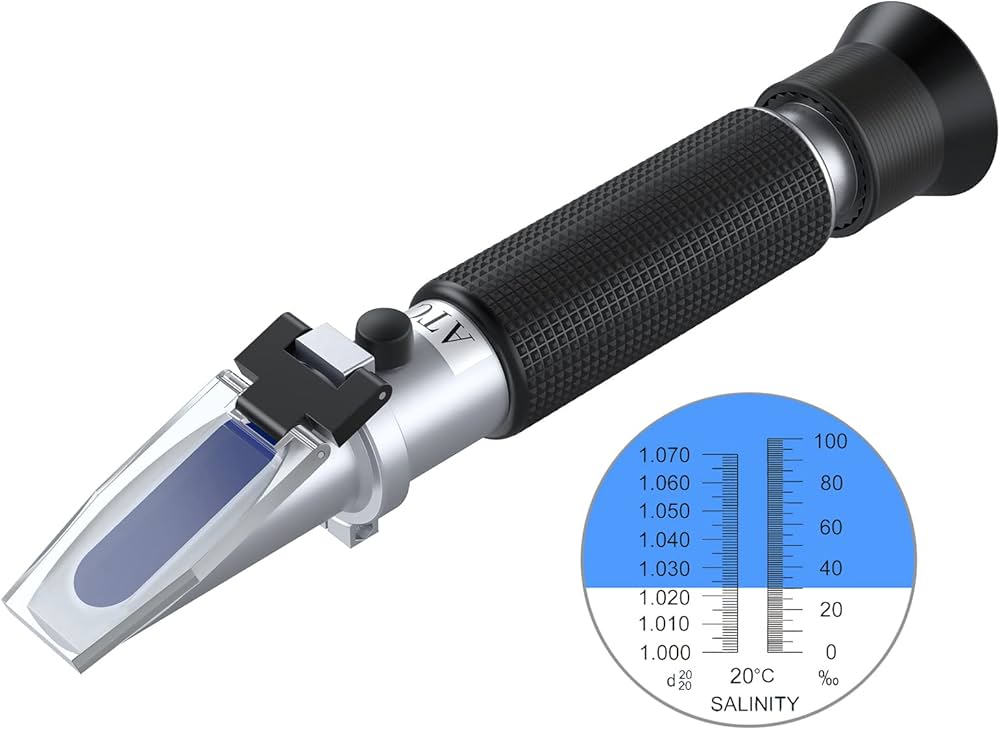
A refractometer is a handheld optical device used to measure the salinity (salt concentration) of water. It works by analyzing how light bends (refracts) through a liquid sample.
In aquaculture, refractometers help farmers:
-
Monitor salt levels
-
Prevent fish stress
-
Improve survival rates
-
Maintain optimal growth conditions
It is one of the most important aquaculture tools Kenya farmers should own.
Why Salinity Testing Matters in Aquaculture
Even freshwater fish like tilapia are sensitive to sudden salinity changes. Incorrect levels can lead to:
-
Reduced feeding
-
Slow growth
-
Osmotic stress
-
Increased disease risk
-
Higher mortality
Regular salinity testing aquaculture helps maintain stable conditions and improve fish farming productivity.
Ideal Salinity Levels for Fish Farming
Salinity is measured in parts per thousand (ppt).
-
Freshwater systems: 0–0.5 ppt
-
Brackish water systems: 0.5–30 ppt
-
Marine aquaculture: 30–35 ppt
For most fish pond water testing Kenya applications (especially tilapia ponds), salinity should remain close to freshwater levels unless salt treatment is intentionally applied.
How to Use a Refractometer (Step-by-Step)
Follow this refractometer usage guide for accurate readings:
Step 1: Calibrate the Device
-
Place distilled water on the prism
-
Close the cover plate
-
Adjust calibration screw until reading shows 0 ppt
Calibration ensures accurate measurements.
Step 2: Collect a Water Sample
-
Take pond water in a clean container
-
Avoid debris or floating particles
-
Test immediately for best accuracy
Step 3: Apply Sample to Prism
-
Place 2–3 drops on the prism surface
-
Close the cover gently
Step 4: Take the Reading
-
Hold the refractometer toward a light source
-
Look through the eyepiece
-
Read the salinity level where the blue and white sections meet
Record results for monitoring trends.
Step 5: Clean After Use
-
Rinse with distilled water
-
Dry with a soft cloth
-
Store in protective case
Proper care extends the life of your aquaculture tools Kenya equipment.
When Should You Test Salinity?
You should conduct fish pond water testing Kenya:
-
Before stocking fish
-
After heavy rainfall
-
After adding salt treatments
-
During water exchange
-
When fish show stress symptoms
Routine testing improves water quality fish farming management.
Common Mistakes to Avoid
-
Skipping calibration
-
Using dirty prism surfaces
-
Testing warm water without temperature compensation
-
Ignoring gradual salinity shifts
Consistency is key in salinity testing aquaculture.
Refractometer vs Hydrometer
| Feature | Refractometer | Hydrometer |
|---|---|---|
| Accuracy | High | Moderate |
| Ease of Use | Simple | Simple |
| Portability | Very portable | Bulkier |
| Speed | Fast | Moderate |
| Best For | Professional aquaculture | Basic hobby use |
For commercial fish farming in Kenya, refractometers are more reliable and precise.
Benefits of Using a Refractometer in Fish Farming
-
Early detection of water imbalance
-
Improved feed efficiency
-
Reduced disease outbreaks
-
Better survival rates
-
Higher harvest yields
When combined with other water quality fish farming tools (pH meter, DO meter), it provides a complete water monitoring system.
Is a Refractometer Necessary for Freshwater Fish?
Yes. Even freshwater ponds may experience salinity fluctuations due to:
-
Evaporation
-
Fertilizer runoff
-
Salt-based disease treatments
-
Borehole water mineral content
Regular fish pond water testing Kenya prevents unexpected losses.
Final Thoughts
A refractometer is a small but powerful investment for fish farming Kenya operations. Accurate salinity testing aquaculture ensures stable water conditions, healthier fish, and better overall farm performance.
If you want to improve water quality fish farming management and reduce risk, adding a refractometer to your aquaculture tools Kenya kit is a smart decision.
Get Your Premium Netting Solutions Today!
For the best quality netting solutions for farming, construction, home, or any other project, look no further than Cougar Nets. Our team of experts is ready to help you choose the perfect product for your needs.
NATIONWIDE & EAST AFRICA DELIVERY AVAILABLE
- Premium quality nets for all applications
- Professional installation and expert advice
- Bulk orders and custom solutions available
- Serving Rwanda, Ethiopia, Tanzania and beyond.
Contact Us for a Quote:
Cougar Nets
Email: sales@mft.co.ke | info@cougarnets.co.ke
Phone: +254 706 903 465
Visit Us: Darosa Plaza, Karen Rd, Nairobi
Website: https://cougarnets.co.ke/