No products in the cart.
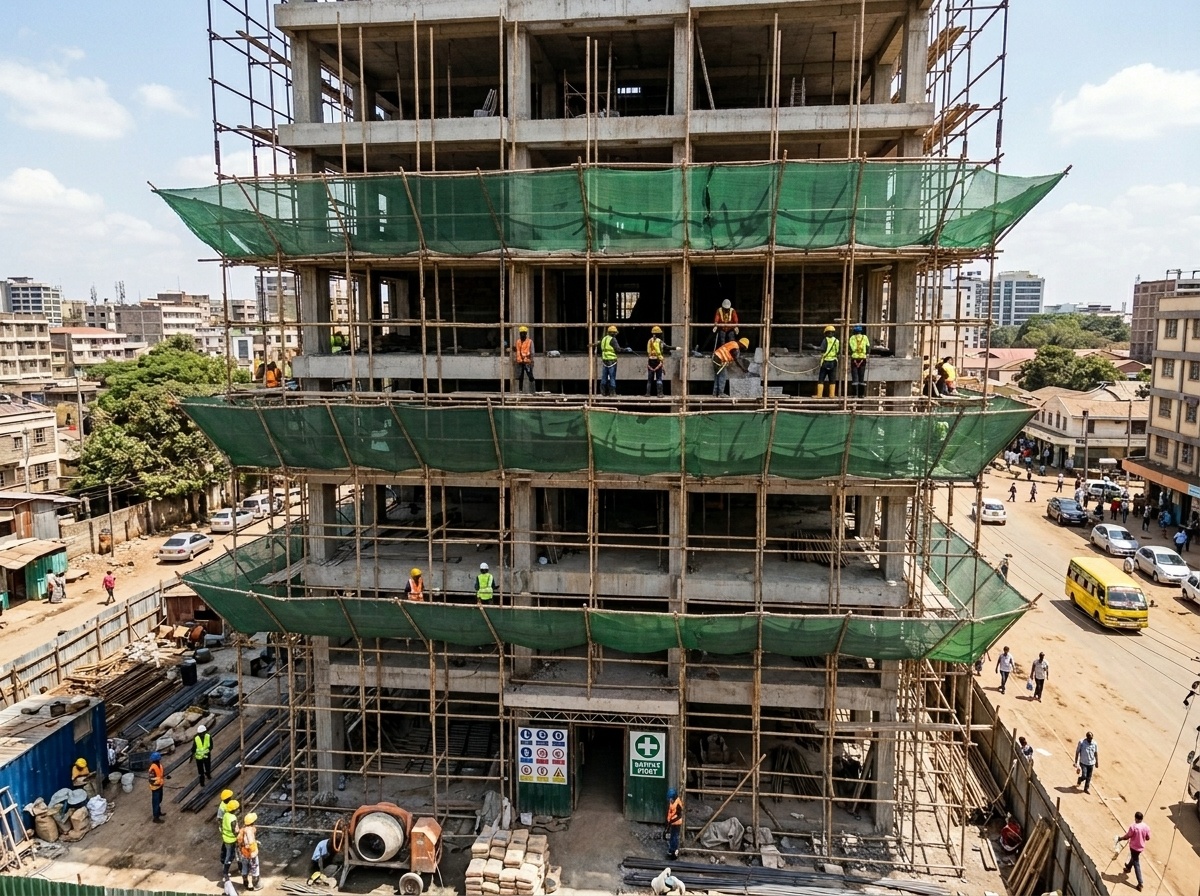
Understanding Safety Net Below the Working Platform Requirements
A safety net below the working platform provides essential protection for workers operating at height by creating a secondary safety barrier beneath elevated areas. Proper planning ensures the net has enough clearance, correct tension, and suitable strength to perform effectively during construction activities.
Construction projects across Kenya and East Africa increasingly require reliable safety solutions for high-rise buildings, bridges, industrial facilities, warehouses, and infrastructure projects. Cities such as Nairobi, Mombasa, Kisumu, and Eldoret continue to experience rapid development, making professional fall protection systems an important part of modern construction management.
A poorly installed safety net may fail to provide adequate protection. Common mistakes include:
- Installing the net too close to the working platform
- Using incorrect mesh strength
- Allowing insufficient sag
- Failing to consider worker impact distance
- Fixing the net to weak support points
A correctly designed safety net system helps protect workers while allowing construction teams to continue operations with greater confidence.
Cougar Nets supplies professional netting solutions for construction, farming, industrial, and commercial applications across Kenya and East Africa. Customers can explore available solutions through the Cougar Nets shop or contact the team through the Cougar Nets contact page for project-specific guidance.
Safety Net Below the Working Platform: How Far Down Should It Be Installed?
The installation distance of a safety net below the working platform depends on the potential fall distance, expected impact energy, and the amount of net deflection during a fall.
A safety net is not designed to be installed tightly against the platform. It requires enough space to absorb impact safely.
Important factors include:
- Vertical clearance below the platform
- Net sag depth
- Distance between support points
- Height of potential fall
- Weight of possible falling objects or workers
The net must have enough room to stretch and absorb energy without allowing the person or object to hit structures below.
Understanding Safety Net Clearance Distance
Clearance distance refers to the available space between the working platform and the lowest point of the safety net during impact.
When calculating clearance, site teams should consider:
- Maximum expected fall distance
- Net deformation
- Worker movement
- Equipment below the work area
Installing a safety net below the working platform without checking clearance can reduce its effectiveness.
A professional assessment should consider the entire fall protection system rather than only the net material.
Why Safety Net Below the Working Platform Sag Matters
Sag is one of the most important technical factors in safety net performance.
A safety net requires controlled flexibility because the net absorbs energy by stretching during impact.
A net installed with insufficient sag may:
- Increase impact forces
- Reduce energy absorption
- Create additional hazards
A correctly tensioned system allows the net to deform safely while preventing contact with lower structures.
Factors Affecting Safety Net Sag
Several conditions influence the required sag:
| Factor | Effect on Safety Net Performance |
|---|---|
| Net size | Larger nets require careful sag management |
| Support spacing | Wider spans increase deflection |
| Installation height | Higher falls require greater consideration |
| Net material | Different fibres absorb impact differently |
| Fixing method | Weak anchors reduce performance |
Professional installers consider these factors before positioning the net beneath an elevated work area.
Choosing the Right Safety Net Below the Working Platform for Construction Sites
Different construction environments require different net specifications.
A safety net system for a residential building may differ from one used for a bridge project or industrial structure.
Common applications include:
- High-rise construction
- Roofing projects
- Bridge maintenance
- Steel erection
- Warehouse construction
- Industrial installations
Construction Safety Net Mesh Selection
Mesh size affects both worker protection and the ability to contain falling materials.
A suitable mesh should:
- Provide adequate fall protection
- Resist tearing
- Maintain strength outdoors
- Handle expected site conditions
For example:
- Smaller mesh may help control smaller falling objects
- Larger mesh may be suitable for specific construction applications
The correct selection depends on project requirements and professional safety assessment.
Safety Net Below the Working Platform: Materials and Durability Factors
The performance of a construction safety net depends heavily on material quality.
Common materials used for professional safety netting include strong synthetic fibres designed for:
- High tensile strength
- UV resistance
- Weather durability
- Repeated outdoor exposure
Kenyan construction environments create different challenges:
Nairobi Construction Sites
Sites require materials that withstand strong sunlight and dust exposure.
Mombasa and Coastal Areas
Safety nets must handle humidity, moisture, and coastal weather conditions.
Rift Valley and Inland Regions
Projects may experience strong winds and temperature variations.
A durable safety net below the working platform should maintain performance throughout the construction period.
Installation Steps for Safety Net Below the Working Platform
Correct installation is just as important as selecting the right net.
A typical installation process includes:
Step 1: Assess the Working Area
Before installation, teams should identify:
- Platform height
- Possible fall zones
- Structures below
- Required coverage area
Step 2: Select Proper Support Points
The net must be attached to secure structural points capable of supporting the expected forces.
Step 3: Install With Correct Tension
The net should have controlled sag while remaining securely fixed.
Step 4: Inspect Before Use
Regular inspections should check:
- Tears
- Loose connections
- Damaged sections
- Weather-related deterioration
For additional construction protection solutions, Cougar Nets provides specialised products through the hardware category for various site requirements.
Common Safety Net Below the Working Platform Installation Mistakes
Many safety issues occur because of incorrect installation rather than poor-quality materials.
Common mistakes include:
Installing Too Close to the Platform
A net requires enough space to absorb impact.
Ignoring Support Strength
Weak fixing points may compromise the entire system.
Using Incorrect Net Specifications
Not every net is suitable for construction fall protection.
Failing to Inspect Regularly
Construction environments expose nets to dust, weather, and mechanical damage.
A professional approach ensures the safety system remains reliable throughout the project.