No products in the cart.
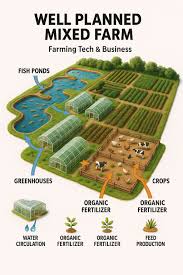
Farm layout planning in Kenya is the strategic organization of crops, livestock, water systems, and infrastructure to optimize space, resources, and yield. Proper planning increases farm efficiency, reduces operational costs, and enhances productivity across diverse Kenyan climates. Cougar Nets provides durable netting solutions to protect crops, poultry, and aquaculture systems while ensuring maximum farm performance.
Introduction: Farm Layout Planning in Kenya
Farm layout planning in Kenya is a critical step for any farmer seeking to maximize productivity and operational efficiency. A well-designed farm layout considers soil type, water availability, sunlight exposure, crop rotation, and livestock management. Cougar Nets has established itself as East Africa’s leading supplier of high-quality nets and protective solutions, ensuring that your farm not only thrives but also meets eTIMS compliance for business tax deductions. From shade nets for crops to poultry mesh and fish pond covers, every element plays a role in efficient farm management.
A smart farm layout reduces resource wastage, improves pest and disease control, and streamlines daily farm operations. Whether you are managing a smallholder plot in Kisumu, a medium-scale farm in Eldoret, or a commercial farm in Nairobi, adopting a systematic planning approach ensures long-term sustainability and profitability.
H2: Assessing Your Farm Site for Optimal Layout
Before designing a farm layout, it is essential to assess your farm site thoroughly. This includes topography, soil quality, water sources, and climatic conditions.
Topography and Land Use
-
Sloped lands: Ideal for terracing to prevent soil erosion.
-
Flatlands: Suitable for irrigation systems and mechanized farming.
Soil Quality
Soil testing determines nutrient levels, pH, and drainage capacity. Divide the farm into zones based on soil fertility to allocate crops or pasture accordingly.
| Zone | Soil Type | Best Use | Notes |
|---|---|---|---|
| A | Sandy Loam | Maize, Vegetables | Good drainage, requires mulching |
| B | Clay Loam | Legumes, Rice | Retains water, risk of waterlogging |
| C | Silty Soil | Pasture, Fruits | Fertile, monitor for compaction |
Water Sources
-
Wells, rivers, and rainwater collection tanks determine irrigation design.
-
Plan layout to minimize water transport costs and ensure adequate coverage for crop and livestock areas.
For East African farms, it is recommended to use water-efficient irrigation systems and consider protective nets to reduce evaporation in high-UV regions like Nairobi.
H2: Zoning Your Farm for Maximum Efficiency
Zoning helps in organizing the farm into functional areas such as crop fields, poultry, fish ponds, and storage facilities.
Crop Zones
-
Group crops with similar water and sunlight requirements together.
-
Use Shade Nets to protect high-value vegetables from scorching heat.
-
High GSM nets, such as the 80% GSM Shade Net, improve yield by reducing plant stress.
Livestock and Poultry Zones
-
Place poultry houses downwind of crop zones to prevent contamination.
-
Protect poultry with durable Poultry Mesh for 24/7 security and biosecurity.
Aquaculture Zones
-
Fish ponds should be located on flat or slightly sloped terrain with easy access to water.
-
Use Fish Pond Cover Nets to reduce predation, debris accumulation, and water evaporation.
Zoning ensures that labor, equipment, and inputs are efficiently deployed, reducing operational delays and maximizing productivity.
H2: Designing Pathways and Access Points
Efficient pathways improve farm management by enabling easy movement of machinery, workers, and livestock.
-
Main Access Roads: Should connect the farm entrance to storage facilities, livestock pens, and irrigation points.
-
Secondary Pathways: Provide access between crop rows and greenhouses.
-
Drainage Considerations: Ensure pathways do not disrupt natural water flow; consider using gravel or raised walkways in high-rainfall areas.
A strategic layout reduces fuel consumption, prevents soil compaction, and increases the speed of day-to-day operations.
H2: Integrating Protective Nets for Crop and Livestock Efficiency
Protective netting is essential in modern Kenyan farms to minimize losses due to pests, birds, and extreme weather.
| Net Type | Recommended Use | Benefits | East African Performance |
|---|---|---|---|
| Shade Nets (50-80% GSM) | Vegetable & Fruit Crops | Reduces heat stress, enhances yield | UV-stable, withstands Nairobi sun |
| Anti-Bird Nets | Orchards, Poultry Feed Areas | Protects crops & feed from birds | Resistant to local pests |
| Poultry Mesh | Chicken & Quail Pens | Security & biosecurity | Durable under high UV & rain |
| Fish Pond Covers | Aquaculture Ponds | Reduces predation & water loss | Saltwater and UV resistant |
| Insect Nets | Greenhouses & Croplands | Minimizes pest damage | 40-mesh suitable for vegetables & flowers |
Installation Tips:
-
Ensure tension is uniform to prevent sagging.
-
Combine nets with poles or trellises like Trellis Net for climbing crops.
-
Maintain regular cleaning to prolong net lifespan.
All Cougar Nets products come with valid eTIMS invoices, supporting business tax deductions.
H2: Optimizing Irrigation and Fertilization Layout
Water and nutrients are the backbone of farm productivity. Layout planning must integrate irrigation lines, water tanks, and fertilization zones.
-
Drip Irrigation: Ideal for row crops, reduces water waste, compatible with net-protected crops.
-
Sprinkler Systems: Efficient for large vegetable fields but may increase evaporation in high-UV areas.
-
Fertilization Zones: Apply nutrients according to soil tests, grouping crops by nutrient demand.
For poultry and aquaculture areas, consider aerator pumps like the Aerator Pump to maintain water oxygenation and enhance productivity.
H2: Crop Rotation and Seasonal Planning
Effective farm layouts account for crop rotation to maintain soil fertility and reduce pest pressure.
-
Rotate legumes and cereals to replenish nitrogen in the soil.
-
Incorporate fallow or cover crop areas to prevent nutrient depletion.
-
Plan seasonal crop placement to optimize sunlight exposure and irrigation needs.
A clear rotation plan integrated into your layout increases both yield and soil health, ensuring long-term sustainability.
H2: Storage, Equipment, and Infrastructure Placement
Storage and equipment areas must be strategically located to reduce transport time and prevent contamination.
-
Storage Sheds: Centralized, ventilated, and pest-proof.
-
Feed Storage for Poultry/Livestock: Secure with anti-bird nets to prevent losses.
-
Machinery Storage: Close to access roads but away from crop zones.
Proper infrastructure layout supports daily farm operations and prevents bottlenecks.
H2: Sustainability and Environmental Considerations
Modern farms must balance productivity with environmental stewardship.
-
Rainwater Harvesting: Position tanks to collect runoff efficiently.
-
Solar Energy: Place solar panels on rooftops or unused land to power irrigation pumps.
-
Windbreaks: Strategically plant trees or use construction shade nets like Construction Shade to reduce soil erosion.
Sustainable layouts reduce costs over time and contribute to climate resilience in regions like Mombasa, Kisumu, and Eldoret.
H2: Finalizing Your Farm Layout Plan
Once all zones, pathways, nets, irrigation, and infrastructure are considered:
-
Draft a scale map of your farm showing all zones.
-
Include net placements for crops, poultry, and fish ponds.
-
Validate the plan against resource availability and labor capacity.
-
Implement in phases to monitor efficiency and make adjustments as needed.
Proper documentation also supports eTIMS compliance and professional reporting for expansion or government support programs.
Conclusion
Planning a farm layout in Kenya requires careful assessment, zoning, integration of protective nets, irrigation planning, and sustainability measures. Cougar Nets ensures that your farm is equipped with the highest-quality shade nets, poultry mesh, anti-bird nets, fish pond covers, and trellis nets, all backed by eTIMS invoices. A well-planned layout improves productivity, reduces operational costs, and guarantees efficient use of resources across East Africa.
CTA: Get Your Premium Netting Solutions Today!
For the best quality netting solutions for farming, construction, home, or any other project, look no further than Cougar Nets. Our team of experts is ready to help you choose the perfect product for your needs.
Nationwide & East Africa Delivery Available
Premium quality nets for all applications
Professional installation and expert advice
Bulk orders and custom solutions available
Serving Kenya (Nairobi, Eldoret, Kisumu), Uganda, Tanzania, Rwanda, South Sudan, Ethiopia, and beyond
Contact Us for a Quote:
Email: sales@cougarnets.com | info@cougarnets.com
Phone: +254 706 903 465
Visit Us: Darosa Plaza, Karen Rd, Nairobi