No products in the cart.
How to Measure Netting Correctly: A Buyer’s Guide
To measure netting correctly, you must calculate length, width, and total square footage while also understanding mesh size differences between square and diamond patterns. Accurate measurement ensures you order the right custom size nets without waste or shortages, especially for farming, fishing, and construction use in Kenya and East Africa.
INTRODUCTION
One of the most expensive mistakes buyers make when ordering netting is incorrect measurement. Whether you’re installing fish pond covers in Kisumu, poultry nets in Eldoret, or construction safety nets in Nairobi, inaccurate sizing leads to material waste or project delays.
In Kenya and across East Africa, netting is often sold in rolls or custom cuts. That means understanding how to measure netting properly—including mesh size, length, and width—is essential before purchase.
HOW TO MEASURE NETTING CORRECTLY
1. Measuring Length and Width
Netting is measured in two main dimensions:
- Length: The longer side of the net
- Width (Height): The shorter side or drop
To calculate total material:
👉 Length × Width = Total area (square meters or square feet)
This is critical when calculating netting dimensions explained for custom orders.
2. Calculating Netting Square Footage
To determine how much netting you need:
- Measure the full area to be covered
- Multiply length by width
- Add 5–10% extra for installation adjustments
This ensures proper coverage without stretching or shortage.
Example:
- 10m × 5m = 50 square meters
- Add buffer = 55m² recommended
This method is widely used in agriculture, construction, and aquaculture projects across Kenya.
3. Mesh Size: Square vs Diamond Patterns
Understanding mesh structure is just as important as dimensions.
Square Mesh
- Equal horizontal and vertical openings
- More stable under tension
- Common in construction safety nets
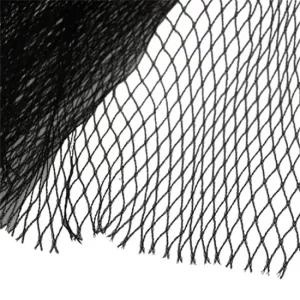
Diamond Mesh
- Angled structure
- More flexible and stretchable
- Common in fishing and agricultural nets
This is key when comparing measuring mesh size square vs diamond
Square mesh is easier to calculate, while diamond mesh may stretch under load, affecting final coverage.
REGIONAL MEASUREMENT CONSIDERATIONS IN EAST AFRICA
Eldoret (Agriculture)
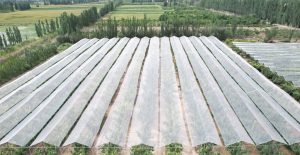
Farmers measuring shade nets must account for wind expansion and seasonal adjustments.
Kisumu (Fishing & Aquaculture)
Fish cage nets require precise measurement to prevent escape gaps and structural failure.
Mombasa (Coastal Exposure)
Humidity and wind stress mean extra allowance must be added during measurement.
Nairobi (Construction)
Safety nets must be measured strictly to compliance standards for scaffolding coverage.
Across Uganda, Tanzania, and Rwanda, similar measurement standards are used for commercial installations.
STEP-BY-STEP GUIDE TO MEASURING NETTING
Step 1: Define Purpose
Are you using the net for farming, fishing, or construction?
Step 2: Measure Area
Use a measuring tape to get exact length and width.
Step 3: Identify Mesh Type
Square or diamond mesh affects final coverage behavior.
Step 4: Add Allowance
Always include extra material for tension, overlap, and installation.
Step 5: Confirm Unit Type
Ensure you are working in meters or feet consistently.
PRO TIPS FOR BUYING CUSTOM SIZE NETS
- Always measure twice before ordering
- Avoid estimating “by eye”
- Consider installation method (stretched vs loose fit)
- Ask supplier for mesh specifications
- Include weather impact in outdoor setups
This is especially important for buying custom size nets in East African climates.
COMMON USE CASES IN KENYA
- Poultry house coverage in Eldoret
- Fish ponds in Kisumu
- Construction scaffolding in Nairobi
- Coastal protection systems in Mombasa
- Agricultural shading across rural Kenya
RELATED PRODUCTS (MANDATORY SECTION)
Here are Cougar Nets solutions that rely on correct measurement:
- Fish Pond Cover Nets – Requires precise sizing to match pond dimensions and prevent fish escape.
- Anti Bird Nets – Must be accurately measured for orchard and greenhouse coverage.
- Circular Fish Cages – Requires exact diameter and depth measurement for stability.
- Poultry Farming Nets Category – Used in structured poultry housing that depends on accurate dimensions.
- Home & Garden Nets Category – Covers gardens, balconies, and crop protection areas.
PEOPLE ALSO ASK
1. How do you measure netting correctly?
You measure netting by calculating length and width, then multiplying to get total area. Always add extra allowance for installation and tension adjustments, especially in outdoor applications in Kenya.
2. What is the difference between square and diamond mesh?
Square mesh has equal openings and is more stable, while diamond mesh is angled and more flexible. The choice affects how the net stretches and how you calculate coverage.
3. How do I calculate netting square footage?
Multiply length by width to get total area. For example, 8m × 4m equals 32 square meters. Add extra margin for fitting and installation.
4. Why is mesh size important when buying nets?
Mesh size determines strength, flexibility, and coverage efficiency. Incorrect mesh selection can lead to poor performance or structural failure.
5. Can netting stretch after installation?
Yes, especially diamond mesh and nylon-based nets. That’s why extra allowance is always recommended during measurement.
FAQ SECTION
1. What is the correct way to measure netting for purchase?
The correct way is to measure both length and width of the installation area, then calculate total square meters. Always confirm mesh type and add extra allowance for fitting and tension adjustments.
2. Do I measure netting stretched or relaxed?
Always measure in its intended installation state. If the net will be stretched, factor in elasticity and add extra material to avoid shortages.
3. What happens if I order the wrong net size?
Ordering incorrect size can lead to poor coverage, weak installation, or complete project failure, especially in farming and construction applications.
4. Is mesh size the same as net size?
No. Mesh size refers to the size of individual openings, while net size refers to total length and width of the material.
5. How much extra netting should I add when measuring?
It is recommended to add 5–10% extra to account for installation adjustments, overlaps, and tension.
6. Can suppliers cut nets to exact measurements?
Yes, many suppliers offer custom sizing, but accurate measurement from the buyer is still required to avoid errors.
CONTACT US
Get Your Premium Netting Solutions Today! For the best quality netting solutions for farming, construction, home, or any other project, look no further than Cougar Nets…
Get Your Premium Netting Solutions Today!
For the best quality netting solutions for farming, construction, home, or any other project, look no further than Cougar Nets. Our team of experts is ready to help you choose the perfect product for your needs.
NATIONWIDE & EAST AFRICA DELIVERY AVAILABLE
- Premium quality nets for all applications
- Professional installation and expert advice
- Bulk orders and custom solutions available
- Serving Rwanda, South Sudan, Kenya (Nairobi, Eldoret, Kisumu) and beyond.
Contact Us for a Quote:
Cougar Nets
Email: sales@mft.co.ke | info@cougarnets.co.ke
Phone: +254 706 903 465
Visit Us: Darosa Plaza, Karen Rd, Nairobi
Website: https://cougarnets.co.ke/